Enviromental Impact
Universitas Muhammadiyah Semarang is committed to implementing sustainable governance as the foundation of its institutional development. Through transparent, accountable, and ethical decision-making processes, UNIMUS ensures that sustainability principles are embedded in its policies, strategies, and organizational practices.
Our Commitments and Initiatives
At Universitas Muhammadiyah Semarang, sustainability is more than a commitment. It is a guiding principle that shapes ahow we think, learn, and act. We believe that higher education plays a vital role in addressing today’s global challenges, including climate change, as reinforced by the Rector’s Decree No. 604/UNIMUS/SK.PR/2024 on sustainability and climate action to Global Climate Change and we continuously strive to embed sustainable values into every aspect of our institution.This commitment is reinforced through institutional policies and governance frameworks that ensure sustainability is systematically integrated into academic, research, and operational practices.
- UNIMUS Rectoral Decree No. 605/UNIMUS/SK.PG/2024 on the Energy conservation policy
- UNIMUS Rectoral Decree No. 481/UNIMUS/SK.PR/2020 on the Policy on Pedestrian Mobility and Sustainable Transportation within Universitas Muhammadiyah Semarang
- UNIMUS Rectoral Decree No. 207/UNIMUS/SK.HK/2023 on the Smoke free campus area
- UNIMUS Rectoral Decree No. 611/UNIMUS/Sk.PG/2024 on the Clean water concervation policy
- UNIMUS Rectoral Decree No. 160/UNIMUS/SK.PG/2024 on the Reduce Paper Usage on Campus
- UNIMUS Rectoral Decree No. 223/UNIMUS/SK.PG/2024 on the UNIMUS as a Sustainable Green Campus
- UNIMUS Rectoral Decree No. 610/UNIMUS/SK.PG/2024 on the Policy on Packaging Reduction and Hazardous Waste Management
Sustainable Procurement Policy :
Sustainability Research at Universitas Muhammadiyah Semarang
Our approach begins with education. We integrate sustainability across disciplines, equipping students with the knowledge, critical thinking skills, and ethical awareness needed to respond to complex environmental and social issues. Learning extends beyond the classroom through active engagement in community-based activities and institutional research initiatives, including the Energy Research Center established under the Rector’s Decree No. 506/UNIMUS/SK.PP/2024, enabling students and academics to contribute to real-world sustainable solutions.
In research, we are dedicated to advancing innovative solutions that contribute to a more sustainable future. Our work focuses on key areas such as climate change, renewable energy, sustainable transportation, and social inclusion. Through interdisciplinary collaboration, Universitas Muhammadiyah Semarang continues to generate knowledge that supports both local development and global sustainability efforts.
Equally important, we ensure that our campus reflects the values we promote. Through sustainable operation including energy efficiency, responsible waste management, and the development of green infrastructure. we are creating a campus environment that is resilient, environmentally conscious, and future-oriented. Together, we aim to become a model of sustainability in higher education, contributing to the achievement of the Sustainable Development Goals (SDGs) and fostering a more inclusive and sustainable world.
Equally important, we ensure that our campus reflects the values we promote. Through sustainable operation including energy efficiency, responsible waste management, and the development of green infrastructure. we are creating a campus environment that is resilient, environmentally conscious, and future-oriented. Together, we aim to become a model of sustainability in higher education, contributing to the achievement of the Sustainable Development Goals (SDGs) and fostering a more inclusive and sustainable world.
Commitment to Net Zero Emissions
Net zero emissions is a key objective of the Paris Agreement established in 2015, referring to a condition where the amount of greenhouse gases (GHGs) released into the atmosphere is balanced by the amount removed. This balance is attained by minimizing emissions through strategies such as the use of renewable energy, enhanced energy efficiency, and the implementation of sustainable practices, while offsetting any remaining emissions through carbon offset initiatives. Achieving net zero emissions is essential in addressing climate change, as it seeks to substantially reduce the impact of human activities on global warming. Furthermore, this effort supports the broader goals of the Sustainable Development Goals (SDGs) by promoting a future that harmonizes environmental, social, and economic sustainability.
Unimus is committed to promoting sustainable development through various targeted efforts, especially in the areas of procurement, water and energy conservation, and the adoption of solar panels for electricity generation. The university has implemented comprehensive policies to conserve water and electricity across its campuses, while also prioritizing the use of renewable energy sources to support its power needs.
Beyond its campus policies and initiatives, Unimus has also initiated the formation of the “Climate Change and Future Sustainable Research Group” in 2025 to help advance the achievement of net zero emissions targets and the SDGs. As a tangible commitment, Unimus actively promotes the energy transition, strengthens environmental sustainability efforts, and contributes to reaching the net zero emissions target by 2060
Carbon Reduction Targets (Scope 1 and 2) at Universitas Muhammadiyah Semarang in Alignment with the GHG Protocol
UNIMUS has formally established a long-term carbon reduction target aligned with global climate goals, national commitments, and the Greenhouse Gas (GHG) Protocol classification framework. The university is committed to achieving net-zero greenhouse gas emissions by 2060, explicitly covering Scope 1 (direct emissions) and Scope 2 (purchased electricity emissions), with partial inclusion of Scope 3 (indirect emissions) as part of its extended carbon management strategy.
This commitment strengthens UNIMUS’s alignment with Indonesia’s national roadmap to reduce emissions by 31.89% by 2030 and achieve net-zero emissions, while also reflecting international best practices in carbon accounting and reporting. By setting a 2060 net-zero target, UNIMUS demonstrates an accelerated timeline beyond national targets and positions itself within the highest ambition category for global higher education institutions.
To ensure measurable, systematic progress toward this target, UNIMUS has implemented an institution-wide carbon management system structured according to the GHG Protocol scopes, integrating policies, infrastructure, operations, and behavioral change initiatives.
For Scope 1 emissions, Universitas Muhammadiyah Semarang (UNIMUS) mitigates direct emissions arising from both stationary and mobile combustion by promoting low- and zero-emission transportation systems, including the use of electric vehicles and electric bicycles. This effort is further reinforced by the implementation of a pedestrian mobility and sustainable transportation policy under UNIMUS Rectoral Decree No. 481/UNIMUS/SK.PR/2020 , which limits the use of fossil-fuel-based vehicles within the campus. Additional initiatives include the utilization of biodiesel as a renewable fuel alternative and the adoption of green office practices aimed at reducing fuel consumption and resource use (UNIMUS Rectoral Decree No. 605/UNIMUS/SK.PG/2024)
For Scope 2 emissions, UNIMUS prioritizes the reduction of emissions associated with purchased electricity by expanding on-site renewable energy generation, particularly through the installation of solar photovoltaic systems across campus facilities. This is complemented by the implementation of energy-efficient technologies, such as low-energy air conditioning systems and automated lighting controls, which collectively decrease dependence on fossil-fuel-based electricity while enhancing overall energy efficiency.
For Scope 3 emissions, UNIMUS adopts a comprehensive set of strategies to address indirect emissions. These include waste segregation initiatives, composting programs to mitigate methane emissions, hazardous waste treatment through wastewater management systems (IPAL), and the operation of a campus waste bank to support recycling and circular economy practices. Furthermore, digital transformation efforts such as the use of the UNIMUS e-learning platform and the adoption of hybrid and virtual meeting systems—contribute to reducing emissions associated with commuting and business travel.
These efforts are further reinforced by a range of complementary sustainability measures, including the incorporation of green building features, the provision of renewable backup energy systems, lithium-based battery charging infrastructure, and campus-wide environmental awareness programs. In addition, Universitas Muhammadiyah Semarang (UNIMUS) embeds research and innovation within its decarbonization strategy, particularly in areas such as Circular Economy, low-carbon education, and the development of sustainable materials.
Through this integrated, policy-oriented, and measurable approach, UNIMUS ensures that its carbon reduction targets for Scope 1 and Scope 2 emissions are not only well-defined but also effectively implemented across all emission scopes. This reflects a strong, institution-wide commitment to achieving net-zero emissions by 2060, in full alignment with the Greenhouse Gas Protocol framework and internationally recognized sustainability standards.
Sustainability Training at Universitas Muhammadiyah Semarang
Universitas Muhammadiyah Semarang actively organizes sustainability-related training programs for both students and staff as part of its commitment to advancing sustainable development. These initiatives are designed to strengthen awareness, knowledge, and practical skills in addressing environmental challenges in line with the university’s values. To enhance participation and impact, the university collaborates with internal communities, including student organizations, as well as external partners. The training activities cover a range of environmental topics such as emergency preparedness, fire safety, climate adaptation practices, and strategies to reduce waste and minimize environmental impact on campus. Through these programs, participants are encouraged to develop a deeper understanding of sustainability and to apply sustainable practices in their daily academic and social activities.
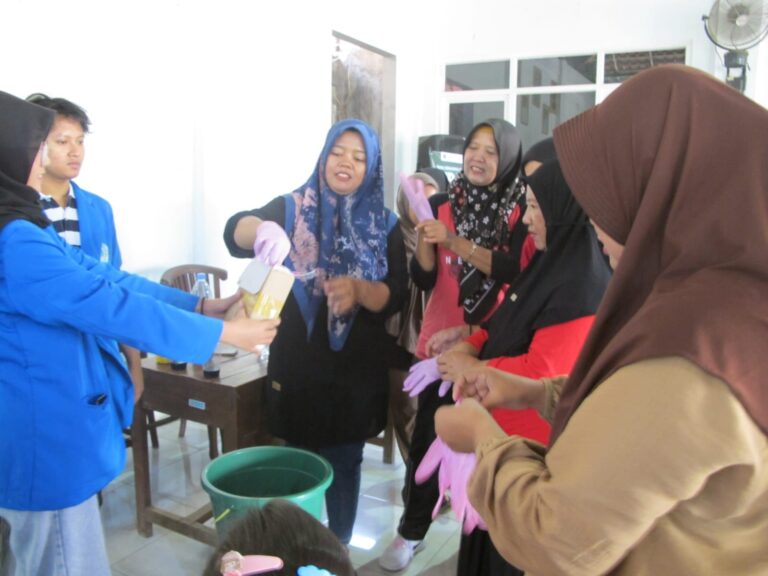
Himatepa Conducts Compost Training
The Student Organization Capacity Strengthening Program Team from the Food Technology Student Association conducted a community training in Ringinarum Village, Kendal, on August 23, 2025, to promote the utilization of organic waste into compost as an environmentally friendly solution to reduce waste and support sustainable agriculture.
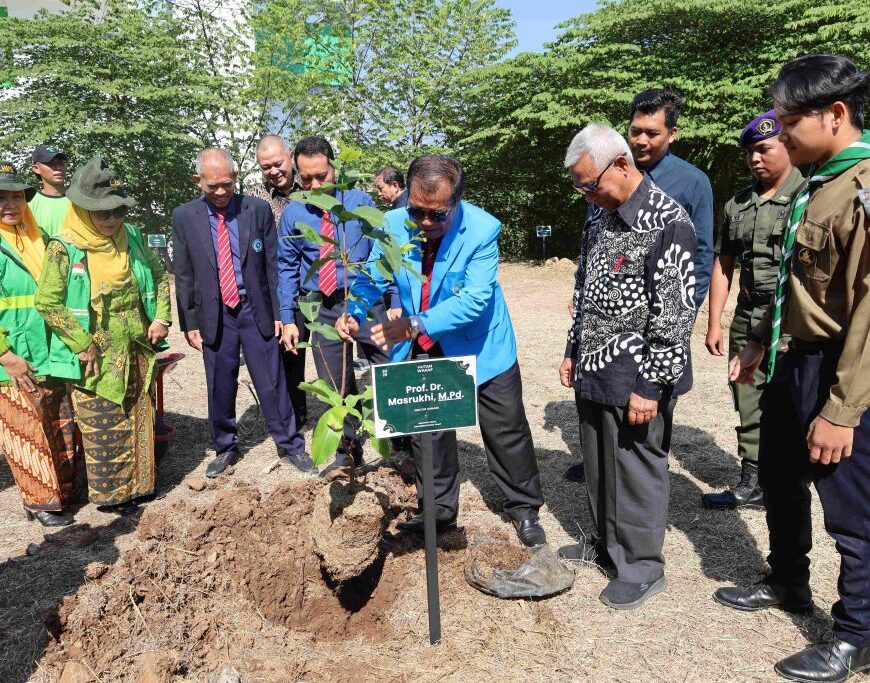
Unimus Launches Waqf Forest
On September 1, 2025, Universitas Muhammadiyah Semarang (Unimus) officially launched the Educational Waqf Forest through a soft launching event marked by tree planting activities and stakeholder collaboration, aiming to develop a sustainable, Islamic-based environmental management model as an educational green space for conservation, agroforestry, and green economy.
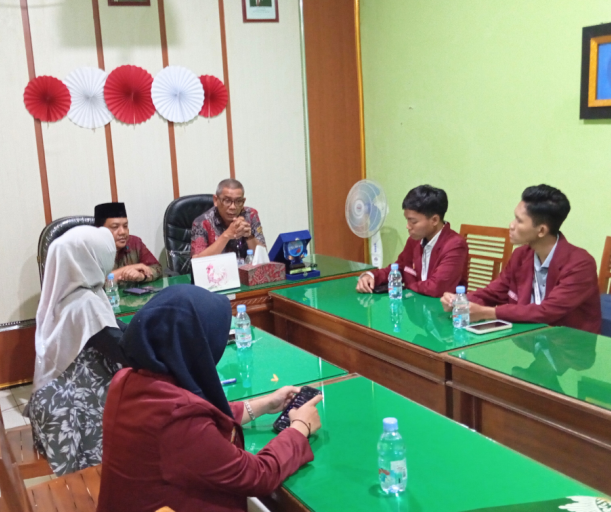
Unimus Partners Demak Environment Agency
On August 7, 2025, the Faculty of Economics and Business of Universitas Muhammadiyah Semarang (Unimus) established a strategic partnership with the Environmental Agency of Demak Regency through an MoU to strengthen collaboration in education, research, and community service focused on environmental and sustainable development issues.
Assessment of Literacy and Knowledge on Sustainable Environment
At Universitas Muhammadiyah Semarang, sustainability literacy and knowledge are assessed through the integration of sustainability concepts across course subjects and supported by the University’s Learning Management System (LMS), which provides structured SDGs-related materials, discussions, and assignments. Faculties incorporate sustainability indicators and information literacy components into coursework to evaluate students’ critical thinking and problem-solving skills in addressing environmental and social challenges. In science and health-related programs, sustainability is further embedded in core subjects through case-based learning and real-world applications. This integrated approach ensures that sustainability knowledge is continuously developed, accessible, and measurable across the university.
Through this combination of curriculum integration and digital learning support, Universitas Muhammadiyah Semarang ensures that sustainability literacy is continuously developed, assessed, and aligned with the goals of sustainable development.
Jl. Kedungmundu Raya No. 18, Kec. Tembalang, Kota Semarang, Jawa Tengah.
(024) 76740296
Copyright 2025, UNIVERSITAS MUHAMMADIYAH SEMARANG. All Rights Reserved.