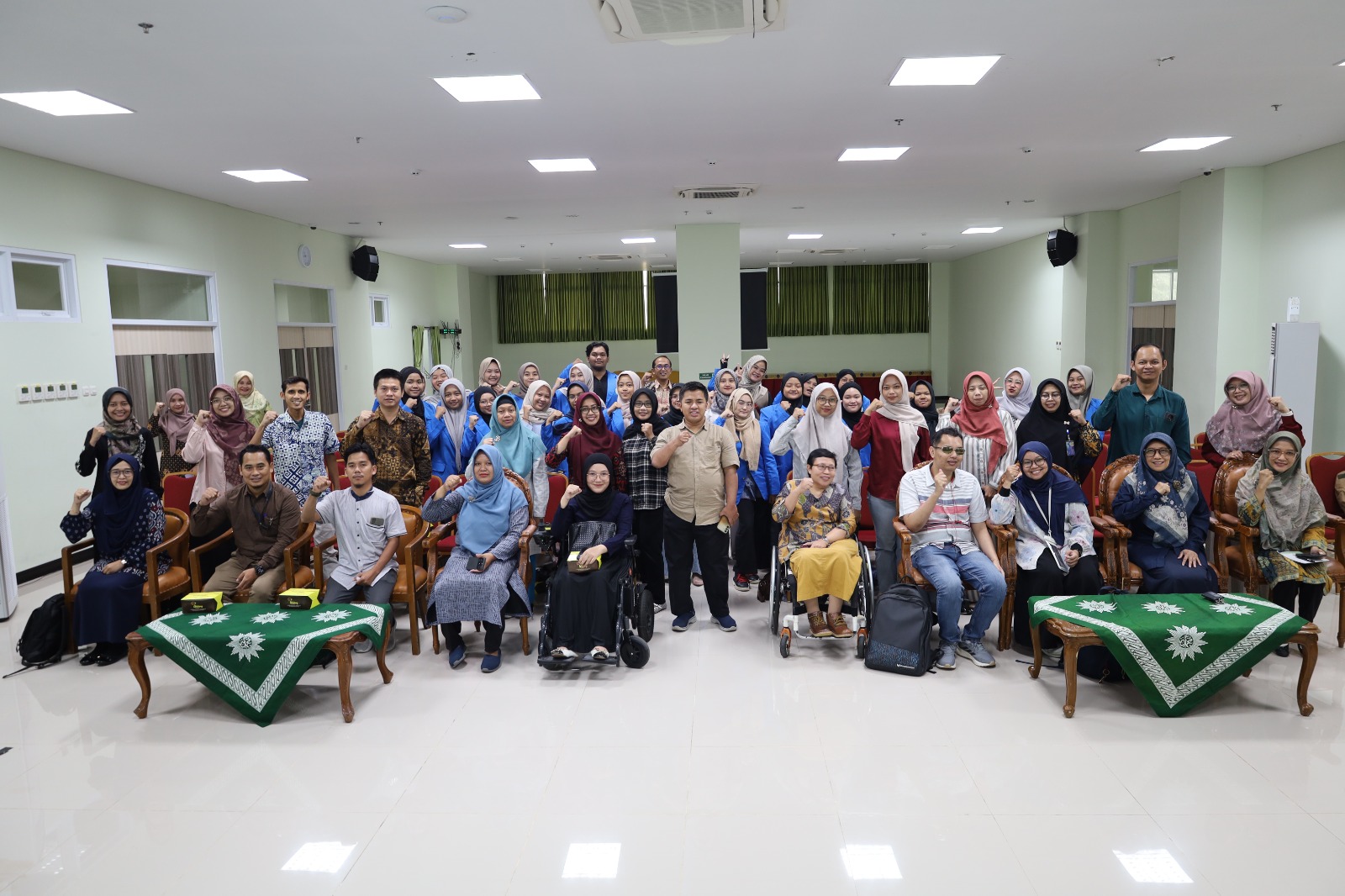
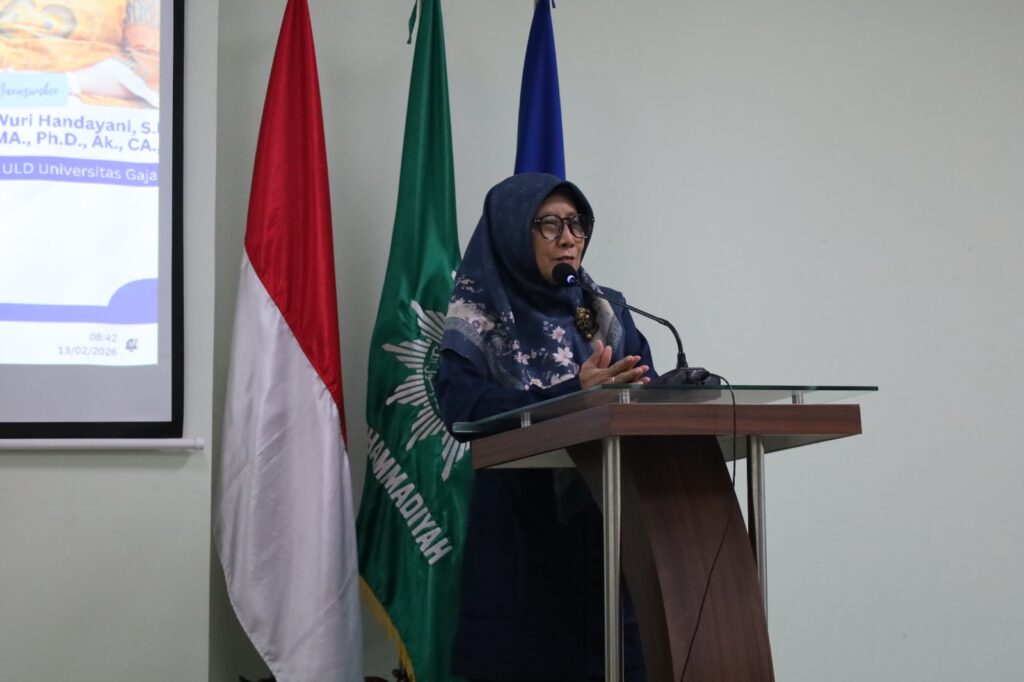
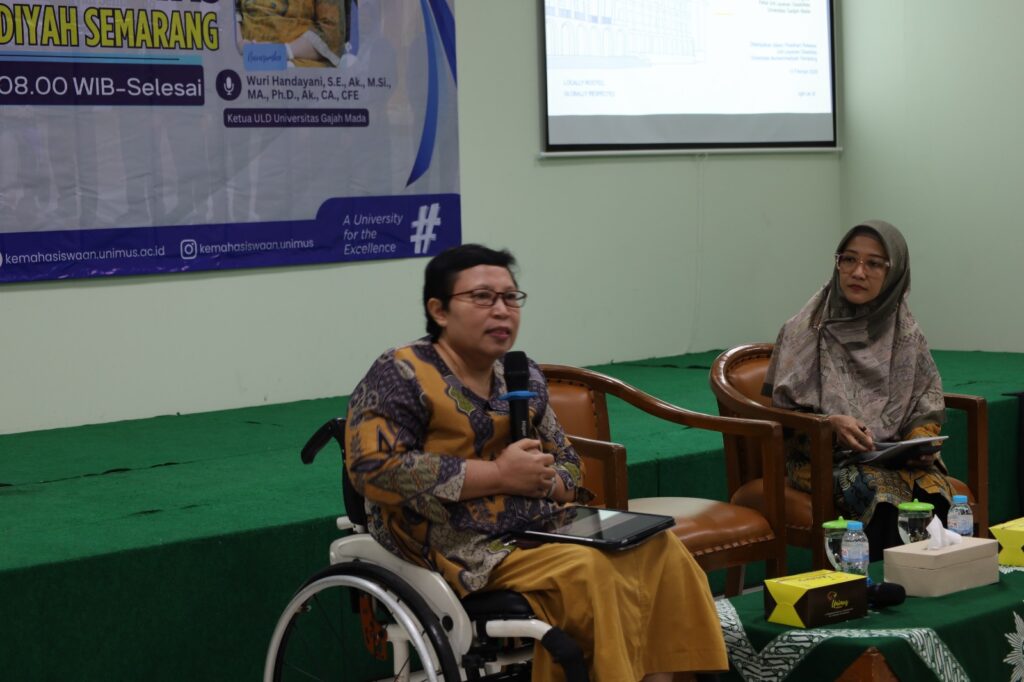
Semarang | Universitas Muhammadiyah Semarang (UNIMUS) organized a training program on handling and supporting students with disabilities as part of its commitment to strengthening inclusive and sustainable student services. The program featured Wuri Handayani, Head of the Disability Services Unit (ULD) at Universitas Gadjah Mada, as the keynote speaker. The event was attended by the Vice Rector III for Student Affairs, Eny Winaryati, the Head of the Student Affairs Bureau (BAK), Fitria Fatichatul Hidayah, faculty leaders, and lecturers representing student volunteers within UNIMUS.
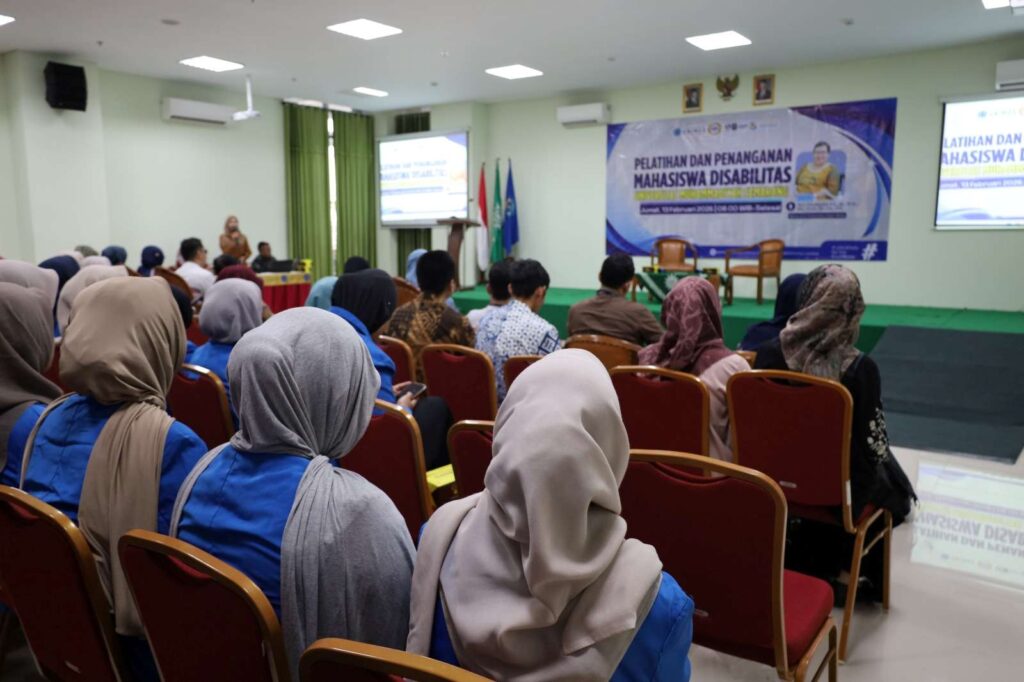
In her opening remarks, the Vice Rector III expressed hope that the program would provide valuable insights and enhance the capacity of the academic community in addressing the needs of students with disabilities comprehensively. She emphasized that student affairs encompass a broad range of responsibilities, from addressing student-related issues to fostering student achievements.
She also highlighted emerging challenges brought about by technological advancements, such as online gambling, online lending, and the increasing demand for specialized services for students with disabilities. These issues, she noted, require serious attention due to their long-term impact on the quality of student services.
Furthermore, she explained that through the facilitation of BAK and the strengthening of eight pillars of student services, various challenges can be managed in a more structured manner. The program is designed to start at the study program level and gradually expand to the university level in a sustainable way.
The training also underscored the important role of student volunteers in supporting social initiatives on campus, particularly as companions for students with disabilities. Volunteers are seen as a source of inspiration and a tangible expression of student empathy and social responsibility.
She added that volunteers are individuals driven by a strong willingness to help others. This initiative is expected not only to bring meaningful value but also to enhance awareness and sensitivity toward various types of disabilities, including physical, mental, and social conditions.
Meanwhile, Wuri Handayani explained the concept of inclusive education and strategies for training and mentoring students with disabilities in higher education. She emphasized that support services should not be limited to physical accessibility but must also include academic assistance, psychosocial support, and the development of students’ independence.
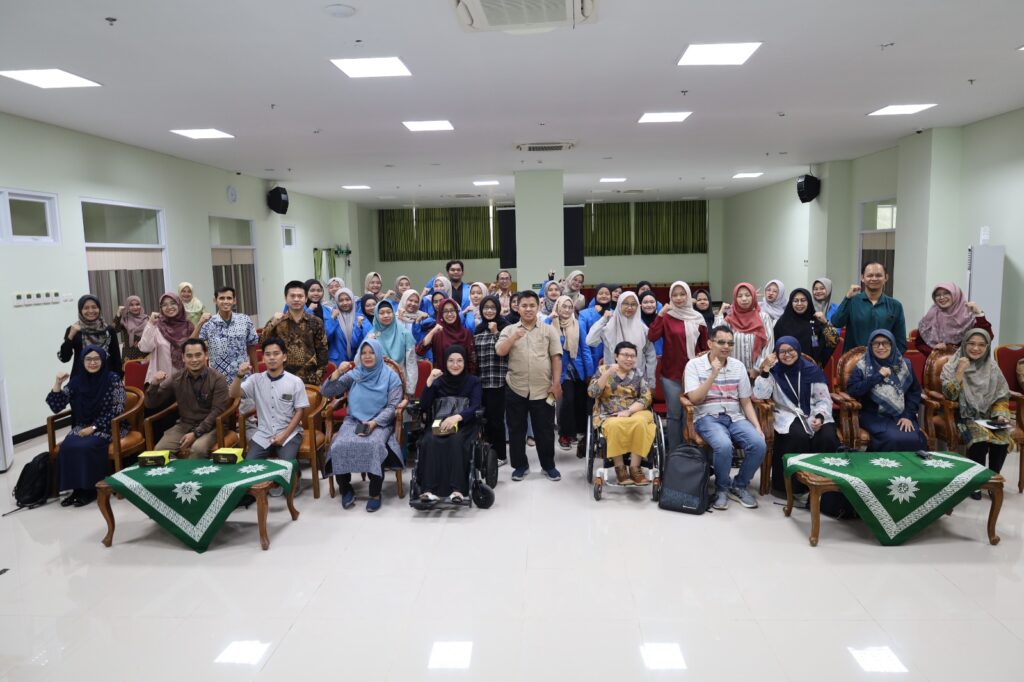
Through this training, lecturers and educational staff are expected to improve their understanding of how to deliver disability-friendly services. Moreover, the program reinforces UNIMUS’ commitment to building an inclusive campus that is responsive to the diverse needs of its students.