




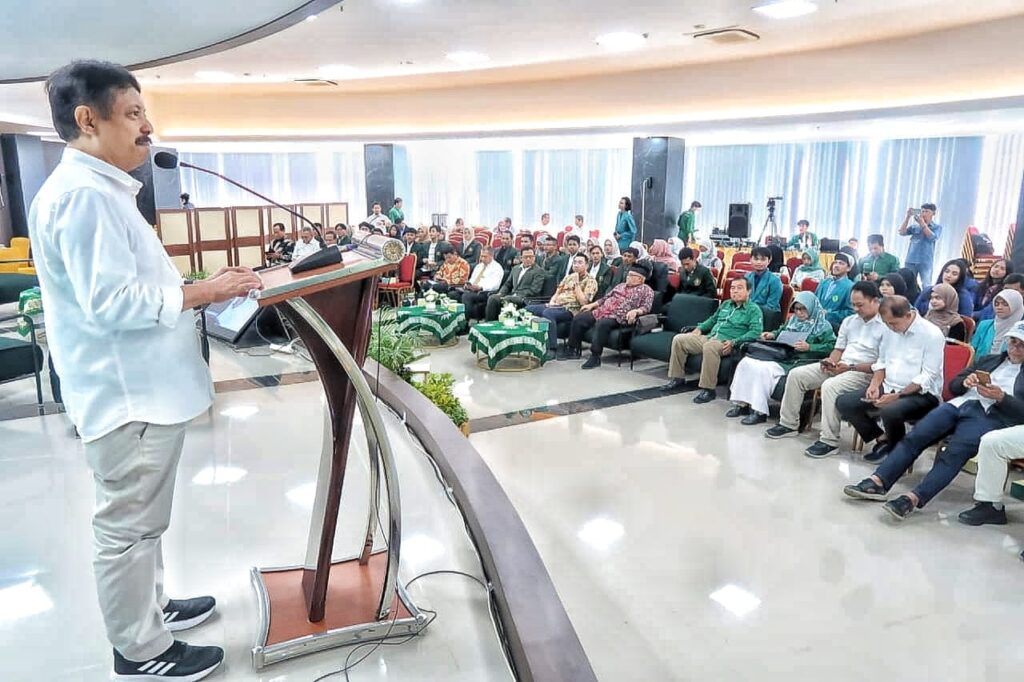
SEMARANG – Universitas Muhammadiyah Semarang (UNIMUS) hosted the Dialogue of Five Rectors titled “The Future of the Press in the Age of AI”, organized by the Central Java branch of the Indonesian Journalists Association (PWI) to mark the 2025 Central Java National Press Day (HPN) and PWI’s 79th anniversary. The event took place at the Auditorium of UNIMUS Hospital, Jalan Kedungmundu 214, Semarang, on Wednesday, 5 February 2025.
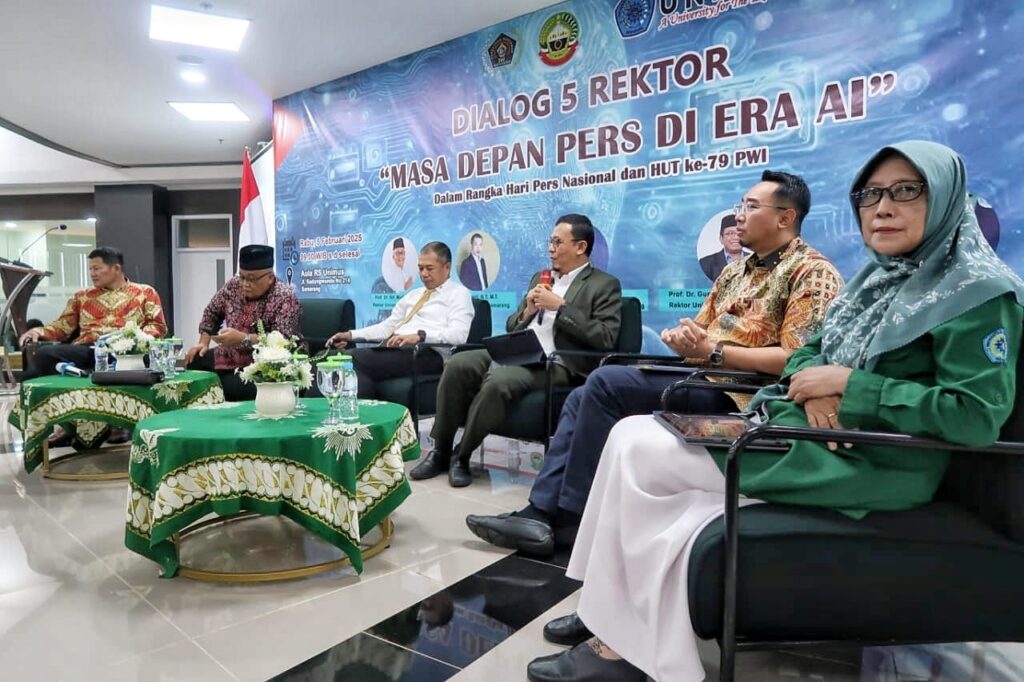
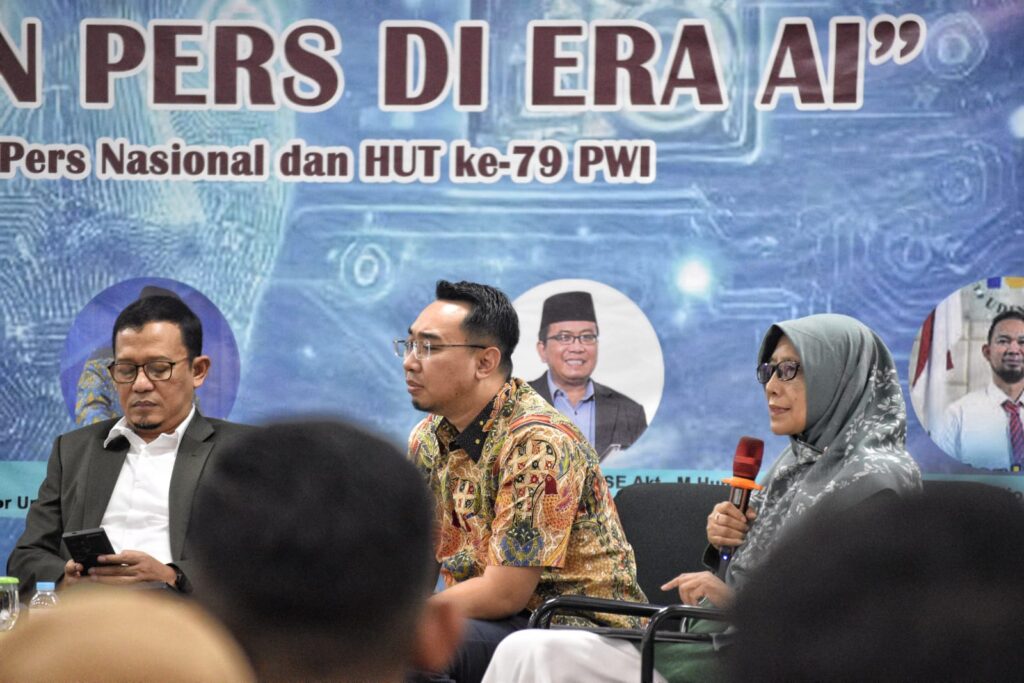
The dialogue featured five university leaders: the Rector of Universitas Wahid Hasyim (Unwahas), Prof. Dr. Mudzakkir Ali, MA; the Rector of Universitas Semarang (USM), Dr. Supari, ST, MT; the Vice Rector III of Universitas Islam Sultan Agung (Unissula), M. Qomaruddin, PhD; the Vice Rector for General Affairs, Finance and Human Resources of Universitas Dian Nuswantoro (Udinus), Dr. Guruh Fajar Shidik, SKom, MCs; and the Vice Rector III of UNIMUS, Dr. Eny Winaryati, MPd. The discussion was moderated by UNIMUS lecturer Dr. Muhammad Munsarif, SKom, MKom.
Also present were UNIMUS Rector Prof. Dr. Masrukhi, MPd; students from the five universities; the Head of the Blora Communication and Informatics Office, Pratikto Nugroho; the Head of the Blora Leadership Communication and Protocol Division, Budiman; the board of PWI Central Java led by its Chair, Amir Machmud NS; and the Chair of PWI Blora, Heri Purnomo, and his team.
AI and the Challenges of Journalism in the Digital Era
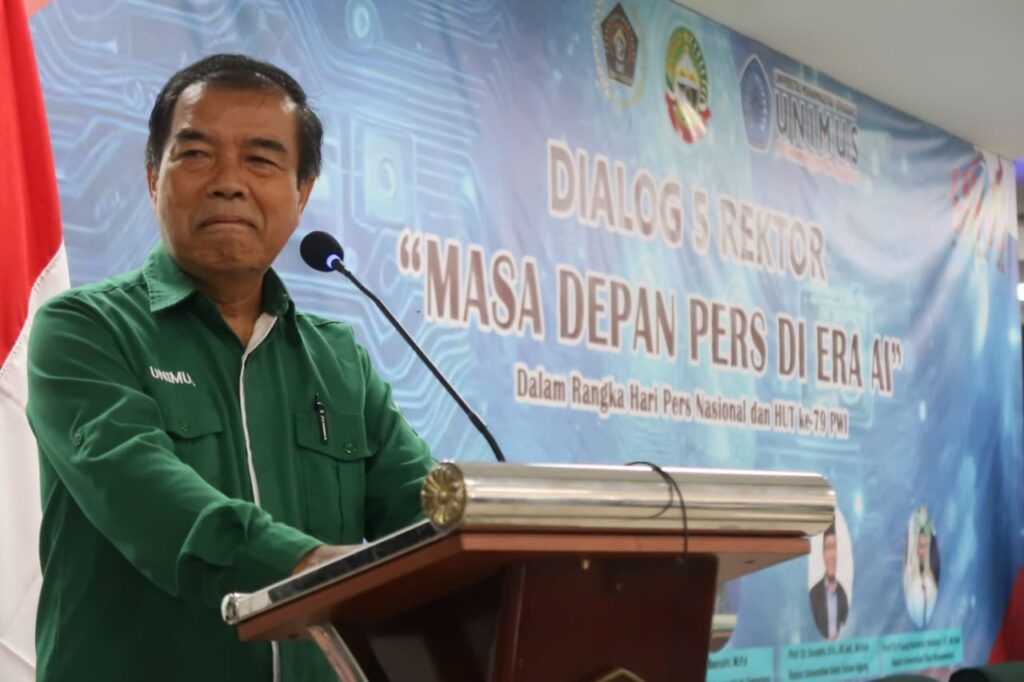
In his opening remarks, UNIMUS Rector Prof. Dr. Masrukhi, MPd, expressed his appreciation for the trust given to UNIMUS to host the event. He said that technological developments, especially artificial intelligence (AI), have changed the paradigm in both education and journalism.
“As technology advances, lecturers are no longer students’ only source of learning. Likewise in journalism, AI can be a tool that speeds up access to information, but it must still be governed by the principles of ethics and accuracy,” said Prof. Masrukhi.
The Chair of PWI Central Java, Amir Machmud, stressed that the use of AI in journalism must remain grounded in ethics and the applicable regulations, such as the Press Law and the Journalistic Code of Ethics.
“Every technology has positive and negative sides. The biggest challenge for journalists today is truly internalizing ethics in how they present the news. AI can be a tool that strengthens information, but it can also become a threat if it is not used wisely,” Amir emphasized.
The Press and AI: Adapting Without Losing Integrity
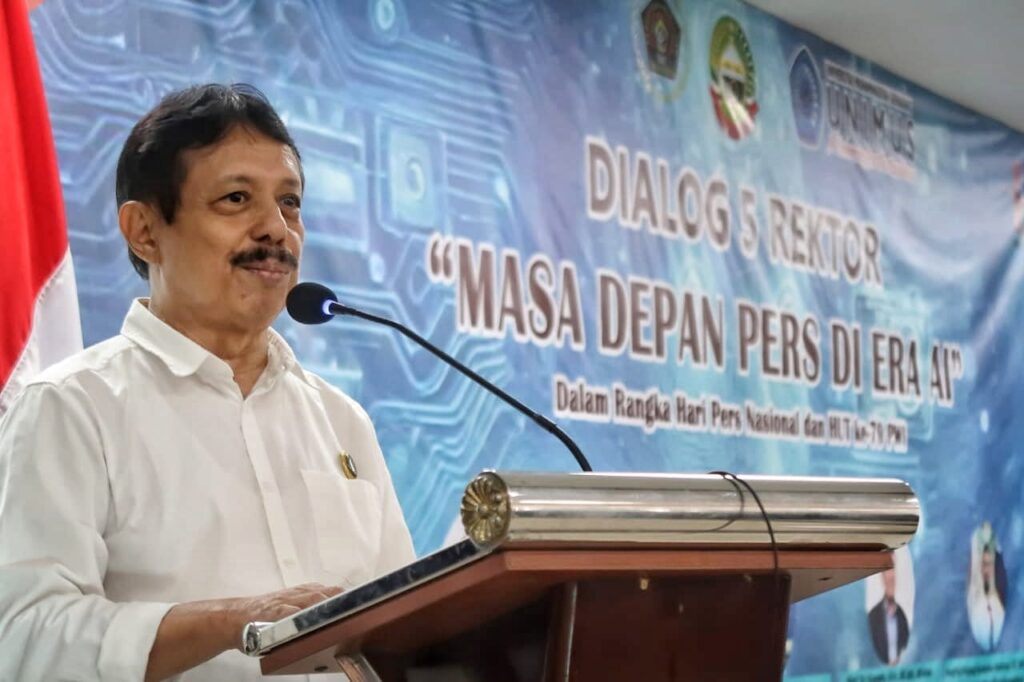
In the discussion session, Prof. Dr. Mudzakkir Ali of Unwahas opened with a joke about the use of ChatGPT in academia. He emphasized that although AI can make things easier, people must still exercise critical thinking and wisdom when dealing with information.
“To face the challenges of AI, we must prepare ourselves with mental strength and good deeds,” he said.
Echoing this, Dr. Supari of USM emphasized that the press and universities share the same responsibility to develop an outstanding generation.
“We must all adapt and even help build AI so that it can better support the press and higher education toward the goal of a Golden Indonesia 2045,” he explained.
M. Qomaruddin of Unissula reminded participants that AI is not a new phenomenon, but its technological progress requires journalism to be even more oriented toward facts, honesty and ethics.
“AI is a tool that can help journalism become better. But if it is not controlled, we can be overwhelmed by thousands of pieces of unfiltered information,” he said.
Dr. Guruh Fajar Shidik of Udinus then traced the development of artificial intelligence from the 1950s to the present, showing how AI has influenced many aspects of life, including media and communication.
Dr. Eny Winaryati of UNIMUS emphasized that journalists must be able to adapt to AI without losing the values of listening, observing and conscience as the main guides in reporting.
UNIMUS Supports the Wise Use of AI. As host, UNIMUS affirmed its commitment to supporting the wise, adaptive and ethical use of technology. The dialogue served as a moment to strengthen collaboration between the press and universities in facing the digital era.
Through this event, journalists, academics and students are expected to better understand how AI can be used as a tool that enriches journalism without neglecting the principles of truth and professional ethics.
“The future of the press in the age of AI is not about replacing humans, but about how we use technology to broaden our insight, improve accuracy and uphold integrity,” Prof. Masrukhi concluded.
Originally published in Indonesian on unimus.ac.id.