
Semarang | Universitas Muhammadiyah Semarang (UNIMUS) hosted a Forum of Heads of National Land Agency (BPN) Offices attended by representatives of Muhammadiyah and ‘Aisyiyah universities (PTMA) across Central Java. The forum was a strategic platform for strengthening collaboration between BPN, Muhammadiyah and universities in achieving orderly land administration, particularly for waqf land and Muhammadiyah institutions (AUM).
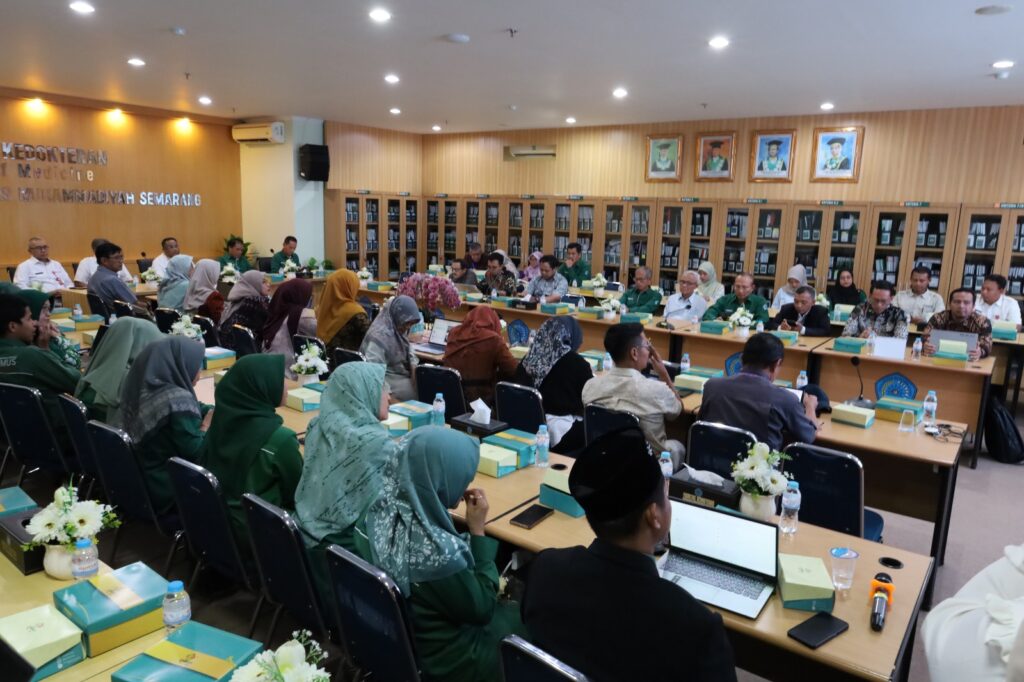
One of the main ideas raised at the forum was to involve students through Thematic Community Service (KKN Tematik). Through this program, students are expected to help with data collection, census and administrative verification of waqf land and Muhammadiyah assets as part of speeding up land certification.
In his remarks, the Rector of UNIMUS, Prof. Dr. Masrukhi, M.Pd., said land administration remains a challenge for many parties, including for assets owned by Muhammadiyah. That is why joint action involving government, universities and the community is needed so that assets can be put in order more quickly and systematically.
“Thematic community service is the right moment to build a joint movement. We need to get on the same wavelength and plan it carefully so that it can be launched nationally together with the relevant ministry,” he said.
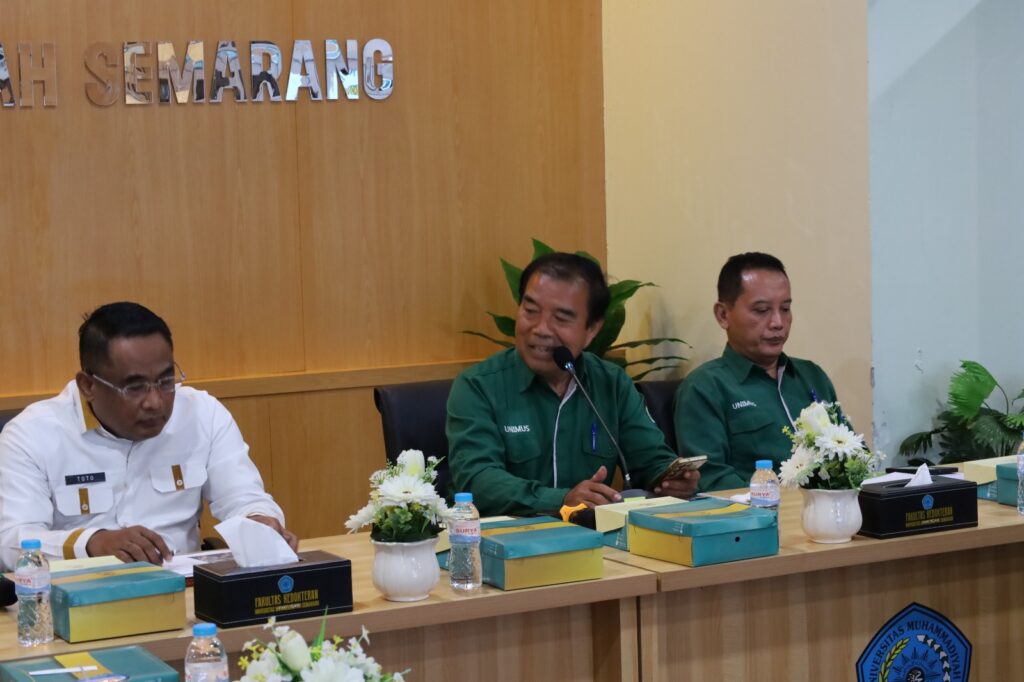
He added that the forum was not just a space for discussion but also a place to draw up concrete steps so that the collaboration can be implemented immediately.
The discussion and sharing session was moderated by UNIMUS Vice Rector I, Prof. Dr. Budi Santosa, M.Si.Med. Participants offered various suggestions on strategies for thematic community service that could help speed up land administration within Muhammadiyah.
The discussion stressed that land is not just a place to stand but the foundation on which many Muhammadiyah institutions stand, such as schools, hospitals, universities, mosques and other social facilities. All these assets need legal certainty through certification so that they are protected and preserved as a trust for future generations.
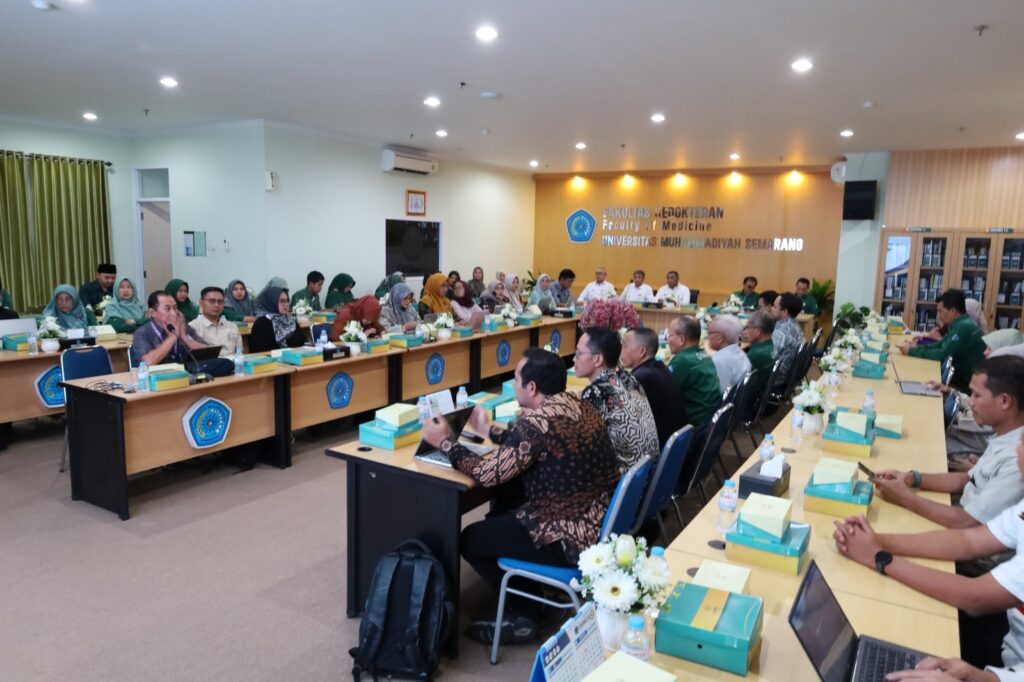
For this reason, synergy between the government through BPN, Muhammadiyah, universities and students is seen as essential for achieving orderly land administration.
A BPN representative explained that the idea follows up on earlier discussions with the Rector of UNIMUS. The government, through the Ministry of Agrarian Affairs and Spatial Planning/BPN, is encouraging Central Java to become one of the regions that builds strong collaboration with universities to speed up the administration and legal certainty of waqf land and organizational assets.
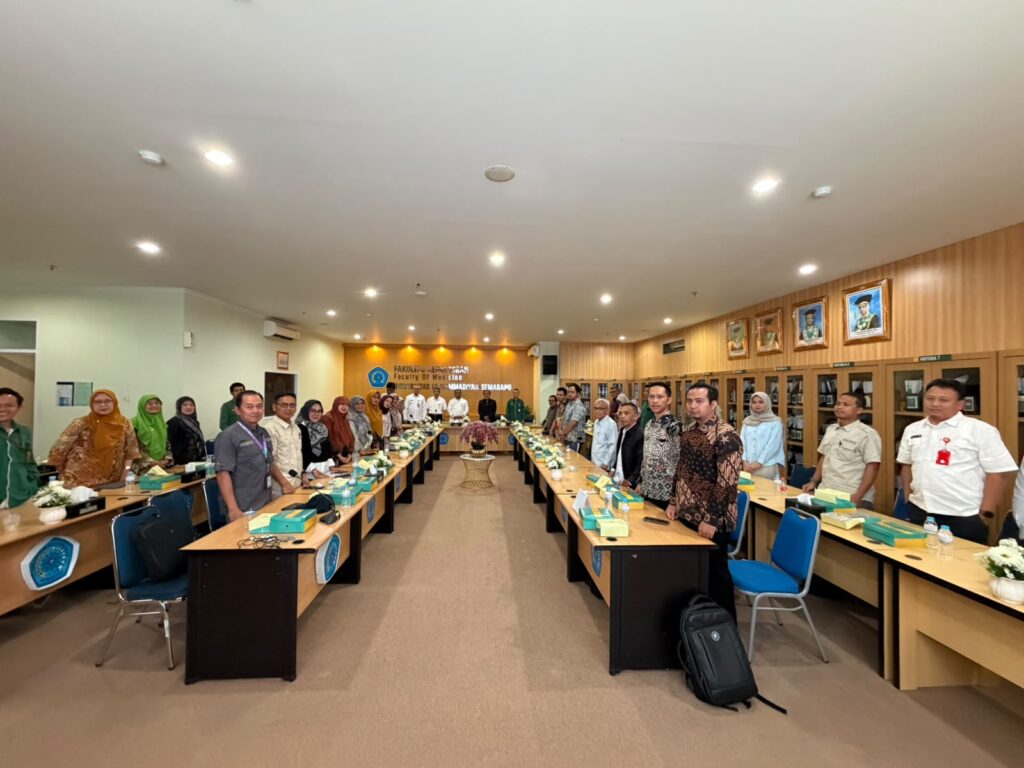
Several acceleration programs are already under way in Central Java, including cooperation on registering waqf land and religious assets. By involving students through thematic community service, data collection is expected to become more comprehensive while giving students experience in community service.
The forum closed with a shared commitment that the results of the discussion would not remain mere talk. All participants agreed to follow up by drawing up implementation steps so that the collaboration between BPN and PTMA in Central Java can soon become a program in the field.
Reported by UNIMUS Public Relations (Tri)