
SEMARANG – Strengthening nutrition services requires not only good operating standards but also collaboration and an ecosystem that can have a wider impact on the community. This was the focus of the Coordination Meeting of Muhammadiyah Nutrition Service and Fulfilment Units (SPPGM), organized by the Muhammadiyah Nutrition Service and Fulfilment Agency (BPPGM) at Universitas Muhammadiyah Semarang (UNIMUS).
Held on Tuesday, 8 September 2026, at UNIMUS, the meeting was a space for coordination and consolidation for 34 SPPGM units, with a total of 68 participants from Semarang and the surrounding area. It was also attended by the Chair of the Central Java Muhammadiyah Regional Board, KH. Tafsir, M.Ag., and the Rector of UNIMUS, Prof. Dr. H. Masrukhi, M.Pd.
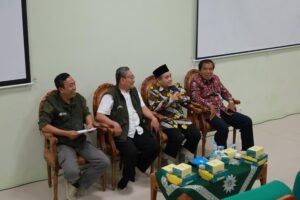
BPPGM was represented by its Director, Dr. M. Nurul Yamin, M.Si.; the Deputy Director for Operations, Ahmad Ma’ruf, M.Si.; the Deputy Director for Investment and Development, Dr. Nasrullah, S.I.P., M.Si.; and the Deputy Director for Finance, Dr. Yuli Isnaeni, M.Kep., Sp.Kom.
In his address, the Director of BPPGM, Dr. M. Nurul Yamin, stressed the importance of stronger standards in managing SPPGM units, from the physical condition of kitchens, facilities and infrastructure to staff competence and legality.
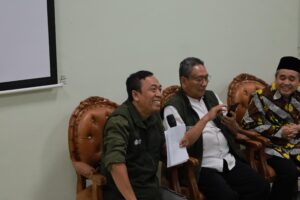
“The physical indicators of a kitchen are its facilities and building. Does it meet the size requirements, and what about its facilities and infrastructure?” he explained.
Besides physical aspects, the competence of kitchen staff is an important concern. BPPGM has run training for cooks as part of efforts to improve the quality of service in SPPGM kitchens.
“Our Agency has run chef training four times, and we hope that every Muhammadiyah kitchen in Central Java, especially in Greater Semarang, will have at least one certified cook,” he said.
BPPGM is also encouraging higher food safety and quality standards. Dr. Nurul Yamin said that although formal implementation of HACCP is still in progress, the agency has prepared instruments covering kitchen facilities, staff, documents and SOPs.
“Our standards are the highest possible, even though we are not yet using an accredited certification body,” he said.
Beyond meeting service standards, Dr. Nurul Yamin stressed that SPPGM units need to be developed as an ecosystem that benefits the community and strengthens the Muhammadiyah movement.
“The value we want to maximize is the ecosystem, so that this can become a da’wah movement of the organization,” he said.
This view was echoed by Dr. Nasrullah, S.I.P., M.Si., who said SPPGM units have wider potential, not only economically but also for developing the Muhammadiyah organization.
“It is not only about the economic ecosystem, but also about developing the organization,” he said.
He said this potential can be seen in the involvement of volunteers from various backgrounds in SPPGM operations. This creates an opportunity to introduce Muhammadiyah more widely to the public.
“In this way we recruit ordinary volunteers who cook in the kitchen, many of whom are not even Muhammadiyah members,” he explained.
He said community involvement in SPPGM can be a door to introducing Muhammadiyah more fully through direct experience of serving the community.
“This is a positive impact of the program on the development of Muhammadiyah,” Dr. Nasrullah continued.
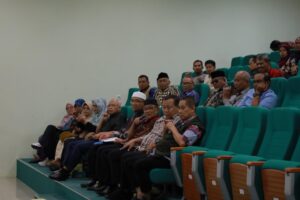
The Chair of PWM Central Java, KH. Tafsir, M.Ag., also stressed the importance of looking at the impact of SPPGM in terms of community and organizational development. Community involvement in the program is seen as one way to extend the benefits of the Muhammadiyah movement.
Dr. Nurul Yamin stressed that coordination is needed to see how far SPPGM units provide concrete benefits to the community and the organization.
“This afternoon we also want to hear about the impact of our SPPGM units on the community and on the organization, beyond providing nutritious meals to beneficiaries. That is what we need, and that is why we are consolidating together,” he explained.
The coordination meeting was an opportunity to align steps, evaluate implementation in the field and discuss the challenges of managing SPPGM units. The consolidation is expected to strengthen the quality of nutrition services while ensuring the program brings wider benefits.
For UNIMUS, supporting the BPPGM agenda is part of the university’s commitment to a Muhammadiyah movement oriented towards the public good. Synergy between the university, the organization, volunteers and the community is expected to strengthen the social service ecosystem and make a real contribution to public health and welfare.
Originally published in Indonesian on unimus.ac.id.