

Semarang | Universitas Muhammadiyah Semarang (UNIMUS) and Politeknik Negeri Semarang (Polines) have opened opportunities for collaboration in education, research and community service. Besides strengthening relations between the two institutions, the cooperation is also directed at developing Artificial Intelligence (AI) that is inclusive, efficient and supports sustainable development.
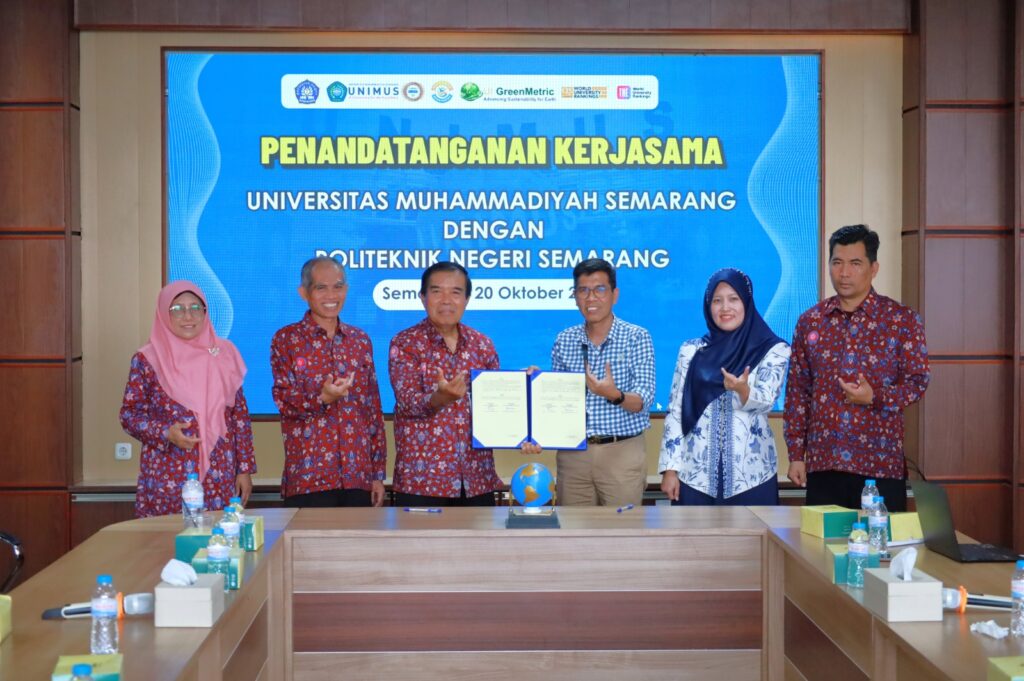
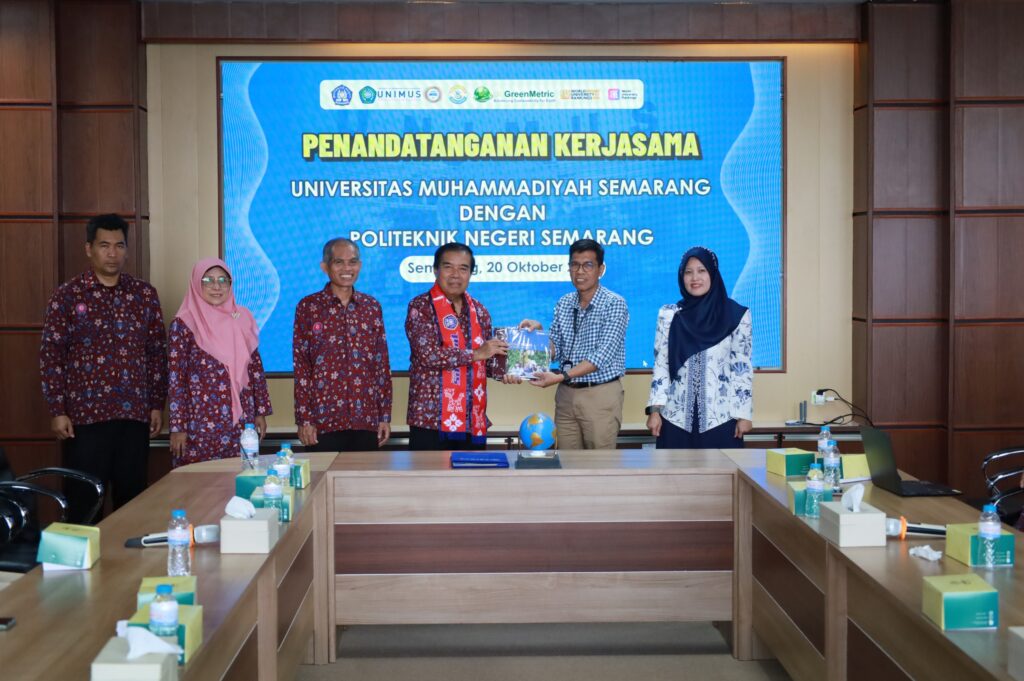
The collaboration was marked by the signing of a Memorandum of Understanding (MoU) by the Rector of UNIMUS, Prof. Dr. Masrukhi, M.Pd., and the Director of Polines, Garut Lambang Groho.
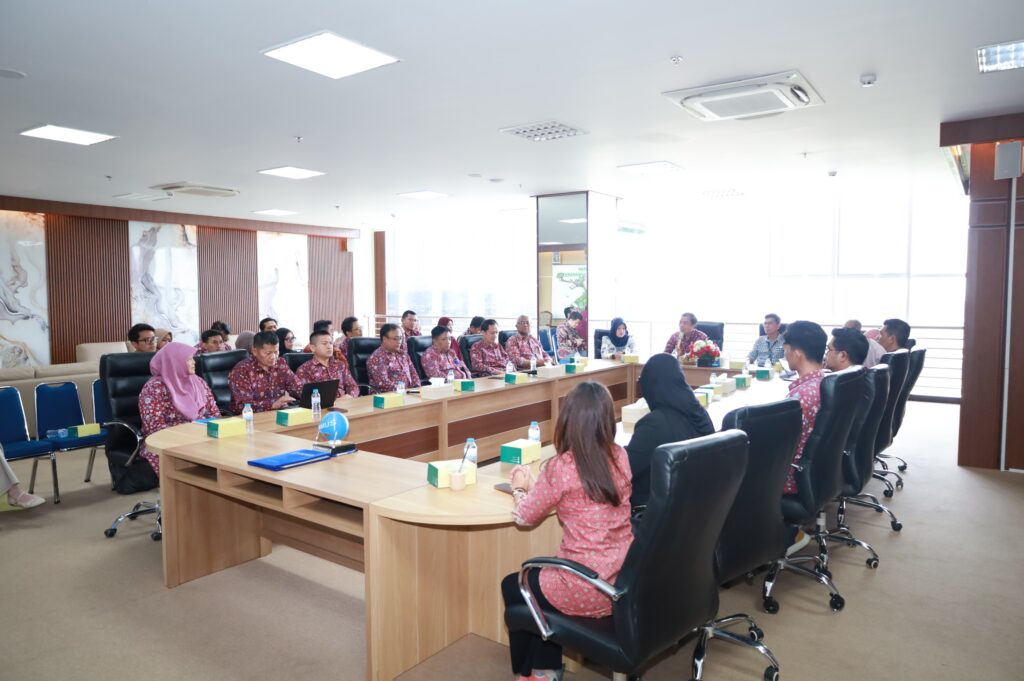
The visiting Polines leadership was welcomed by the Rector of UNIMUS together with Vice Rectors II, III and IV. Also present were the Deans of the Faculty of Economics, Law and Business (FEHBi) and the Faculty of Engineering (FT), as well as the Dean and all lecturers of the Faculty of Computer Science and Digital Technology (FIKOMDIGI).
In his remarks, the Rector of UNIMUS, Prof. Dr. Masrukhi, M.Pd., described UNIMUS’ growth, with nine faculties, 49 study programs and two hospitals (a General Hospital and a Dental and Oral Hospital). He said this growth is an important asset for expanding networks and building collaboration with other universities, including Polines.
He hopes the cooperation will not stop at signing documents but will continue through concrete programs that improve the quality of education, lecturer competence, research and community service.
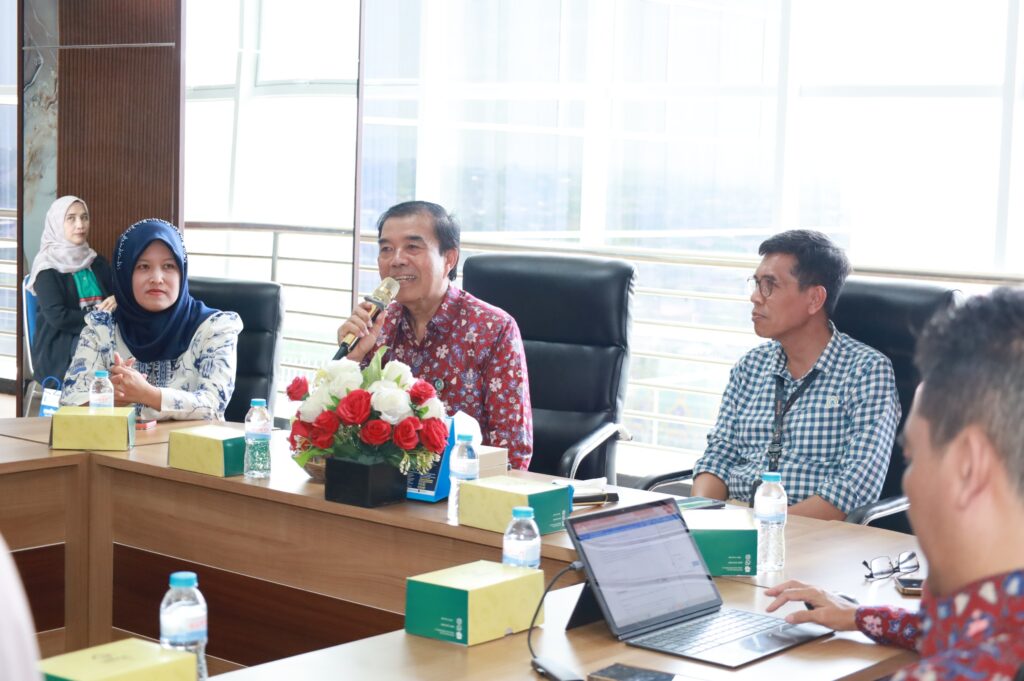
Prof. Masrukhi also shared UNIMUS’ progress in health services. The previous weekend, UNIMUS and UNIMUS Hospital launched a cancer treatment service using cryosurgery technology in cooperation with Royal Hospital in Guangzhou, China. The launch, held on Saturday–Sunday (17–18/10/2026), was attended by 47 cancer experts from countries across Asia. The service has now begun accepting patients.
“It is an honour for UNIMUS to receive a visit from Polines. We hope this meeting brings benefits to both institutions and can be followed up through various cooperation programs,” he said.
The Director of Polines, Garut Lambang Groho, thanked UNIMUS for its welcome. He said UNIMUS’ growth opens opportunities for both institutions to strengthen each other, especially in facing the challenges of higher education and the changing needs of the world of work.
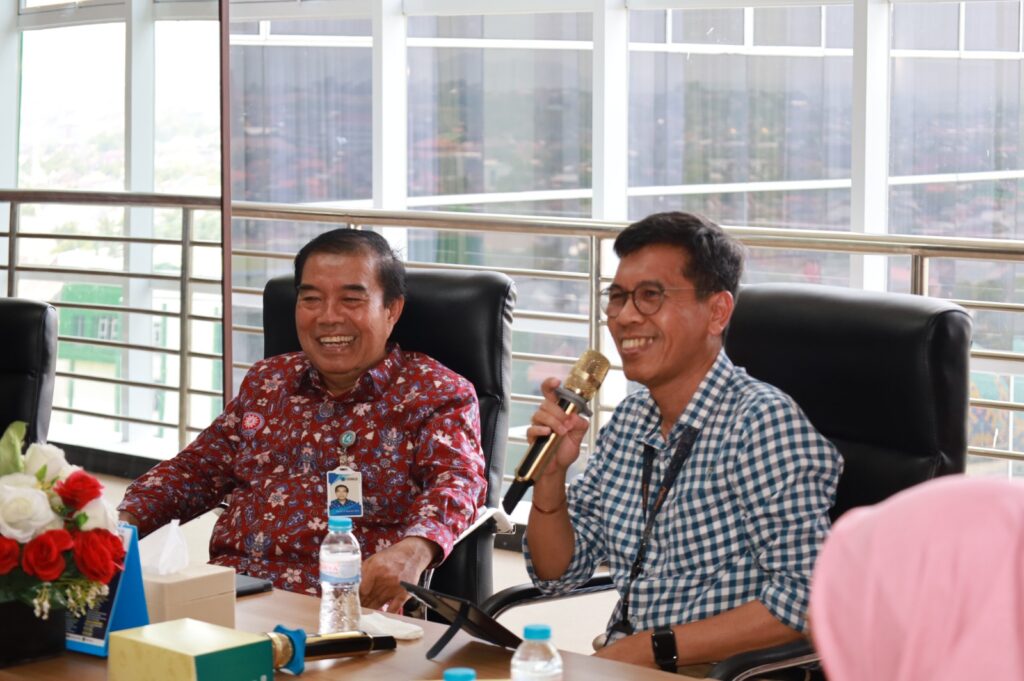
He explained that Polines was founded in 1982 as the Universitas Diponegoro Polytechnic. At first it had three engineering study programs: civil, mechanical and electrical engineering. In 1986, Polines expanded into accounting and business administration to meet industry’s need for professionals with both technical and managerial skills.
Polines became an independent institution in 1997 and has continued to expand its scope. It now has 27 study programs ranging from three-year diplomas and applied bachelor’s degrees to an applied master’s degree in telecommunications.
Garut stressed that there is wide scope for cooperation with UNIMUS, from teaching, joint research and community service to strengthening industry networks and international partnerships.
He also described Polines’ challenges in human resource development, particularly in raising lecturers’ academic qualifications and functional ranks. With around 9,560 students and 355 active lecturers, Polines continues to encourage its lecturers to pursue doctoral degrees.
The link between education and the world of work is also an important concern. Polines has produced 20,921 graduates, with a reported employment rate of 83 percent within six months of graduation. Partnerships with various industries are one way it keeps education relevant to the needs of the workplace.
Garut said cooperation with universities, industry and international partners is a strategic step to widen opportunities for institutional development and improve the quality of graduates.
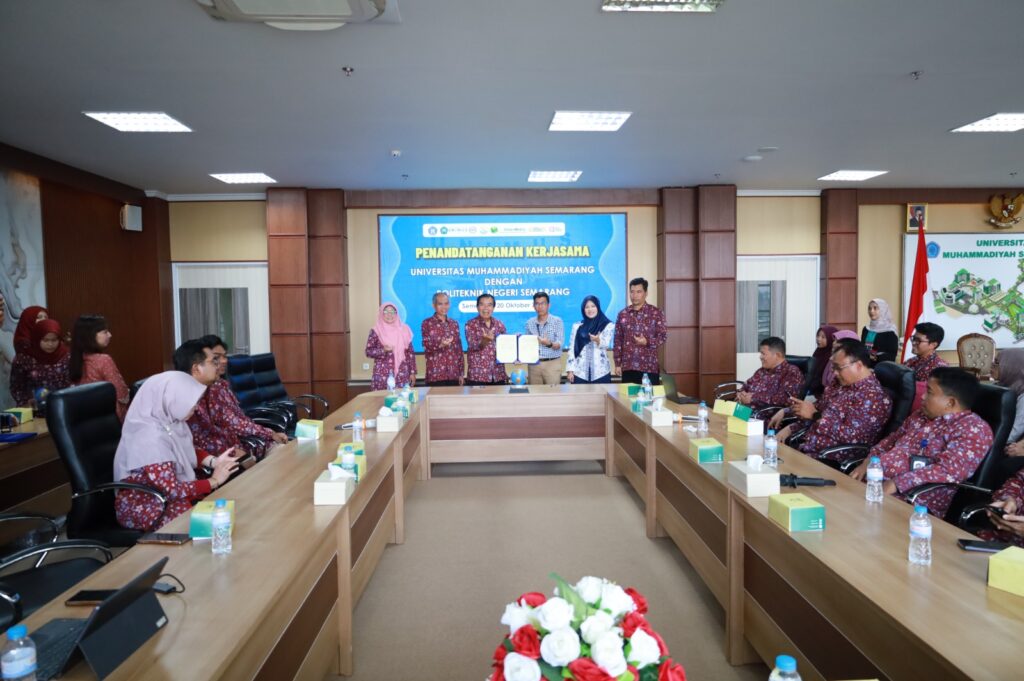
After the MoU signing, the event continued with a discussion on artificial intelligence and the Sustainable Development Goals (SDGs). The discussion was led by Muhammad Yusuf, Ph.D., UNIMUS Vice Rector IV for Cooperation, together with Prof. Dr. Ir. Kurnianingsih, S.T., M.T., Polines Deputy Director IV for Cooperation, Public Relations and Information Systems.
In the discussion, Muhammad Yusuf highlighted the importance of strengthening universities’ digital capacity. Rapid technological change requires educational institutions to keep updating their knowledge, developing competencies and preparing for change.
However, he said discussions about AI should not focus only on the sophistication of machines, the speed of information processing, the accuracy of algorithms or a system’s ability to answer questions. Just as important is how the technology can help solve problems in society, reach the groups who need it and avoid creating new problems for the environment.
This perspective sees AI not just as a product of technological innovation but as a means of bringing wider benefits to human life.
One approach that drew attention is Green AI, the development of artificial intelligence that is not only smart but also resource-efficient and environmentally responsible. With this approach, AI’s success should not be judged only by the accuracy of its algorithms but should also take into account energy needs, system efficiency, accessibility and its impact on society.
This challenge is all the more relevant in Indonesia, where network access and digital infrastructure are not yet evenly spread across the country. AI development therefore needs to be tailored to users’ needs, abilities and conditions so that its benefits are not enjoyed only by those with good access to technology.
Health workers, farmers and other community groups, for example, need to be involved in developing the technology they will use. They should not merely be the objects of AI applications but should have room to voice their needs and take part in decision-making.
A human in the loop approach is important in this context. People still have a role in checking a system’s output, assessing the accuracy of information and making sure decisions fit real situations. Especially in matters involving safety, the public interest and human life, technology still requires ethical judgement, conscience and human responsibility.
AI development therefore needs to move towards human-centered AI that is more inclusive, resource-efficient and able to provide relevant solutions. AI development is also inseparable from global dynamics, so universities need to keep strengthening knowledge, research and cross-disciplinary collaboration.
The discussion also opened the door to future academic cooperation between UNIMUS and Polines. Both institutions have the opportunity to develop collaboration that connects academic excellence, digital technology and the sustainable development agenda.