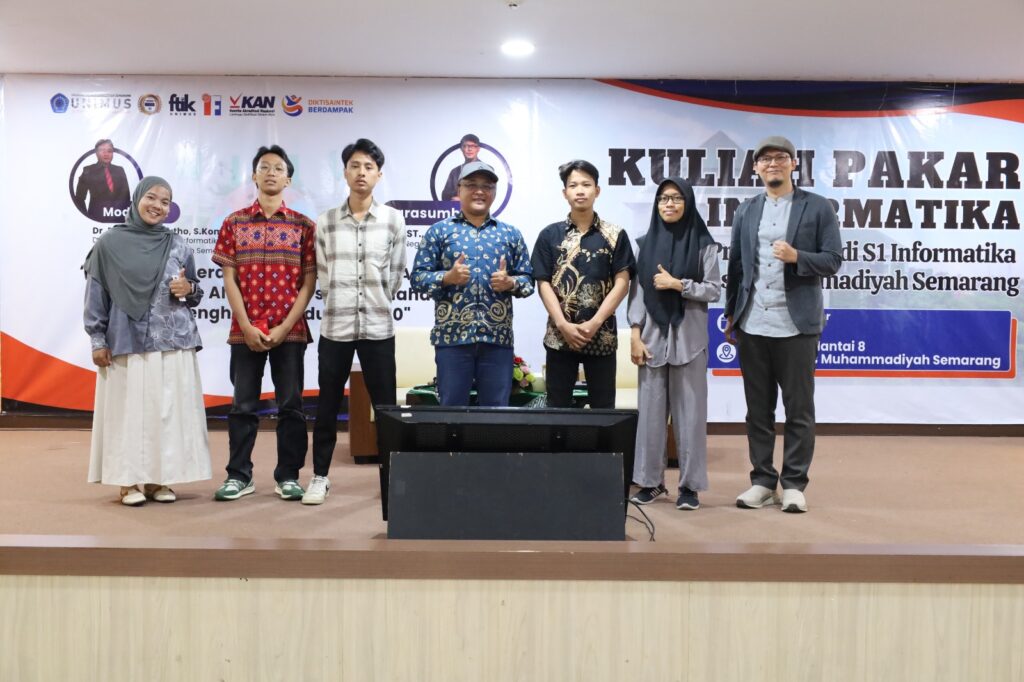
Semarang | The Undergraduate Informatics Study Program organized an expert lecture focusing on strategies for implementing modern artificial intelligence, including Generative AI, AIoT, and Explainable AI, as an initial step in preparing students to face the challenges of Industry 2030. The event was attended by first- and third-semester students, lecturers, and program leaders, reflecting a proactive response to the rapid advancement of AI technologies across various sectors.
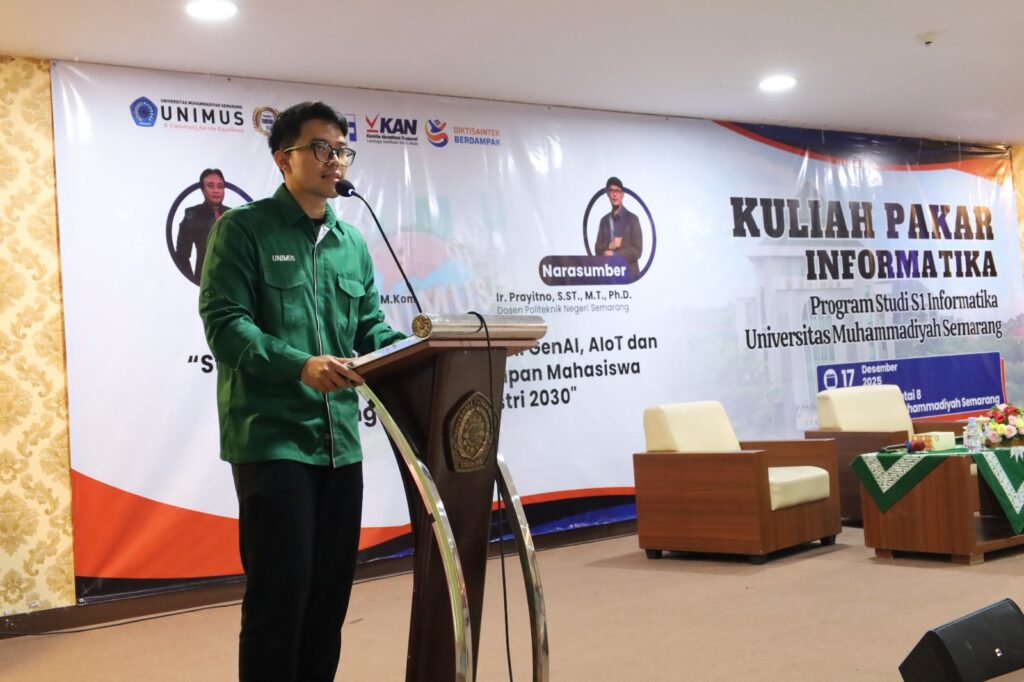
The lecture featured Ir. Prayitno, S.ST., M.T., Ph.D. from Politeknik Negeri Semarang as the keynote speaker, with Dr. Dhendra Marutho, S.Kom., M.Kom. serving as moderator. The Head of the Informatics Undergraduate Program, Muhammad Sam’an, S.Si., M.Mat., along with faculty members, also attended to provide academic reinforcement to participants.
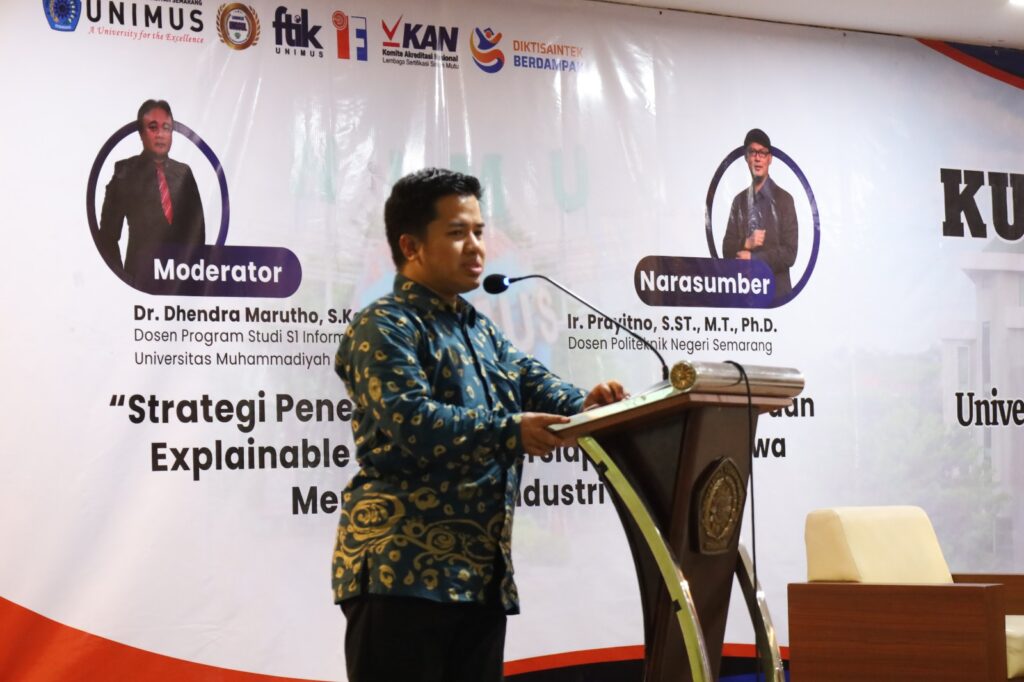
In his presentation, the speaker emphasized the importance of understanding AI not only from a technical perspective but also from conceptual and practical viewpoints. The discussion covered developments in Generative AI and the integration of AI with physical devices through AIoT. Additionally, the importance of Explainable AI was highlighted to ensure that intelligent systems remain transparent, ethical, and accountable.
In his opening remarks, the Head of the Study Program stated that this activity serves as an important introduction for early-semester students to understand the direction of informatics, which is increasingly intertwined with AI. Although students have not formally studied AI yet, early exposure is considered essential to keep pace with rapid technological developments.
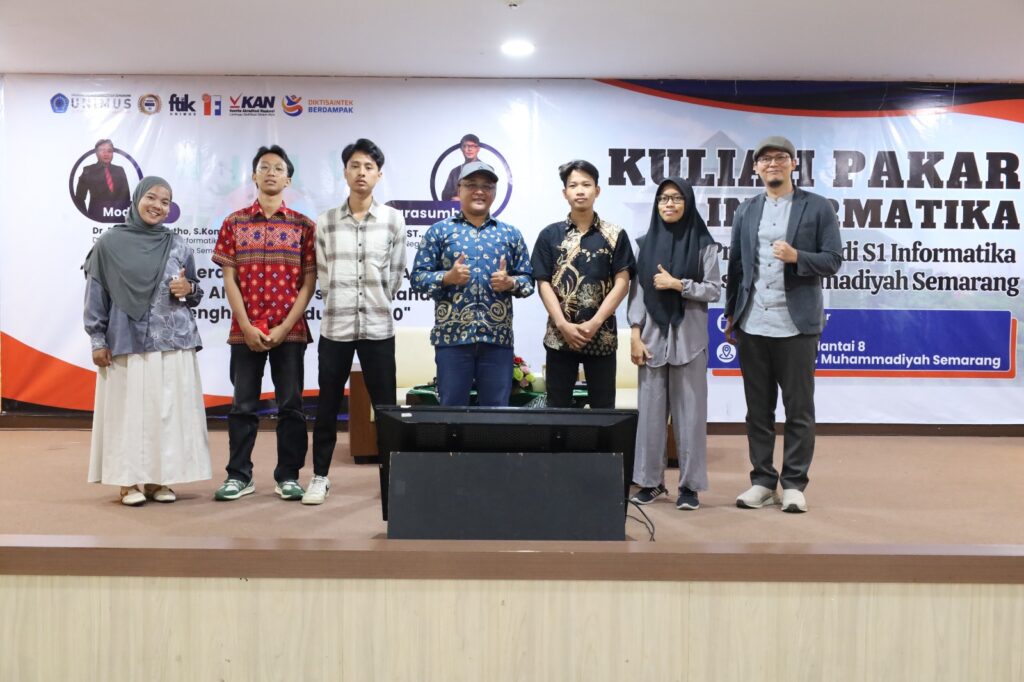
He further noted that student development programs and competitions in informatics are increasingly focused on AI-related fields. Therefore, this expert lecture is expected to provide relevant insights, knowledge, and preparation for students to adapt to future industry demands and technological advancements.
Through this initiative, the Informatics Undergraduate Program reaffirms its commitment to delivering contextual and adaptive learning aligned with global industry needs, particularly in preparing students for the era of Industry 2030.