
Semarang | Universitas Muhammadiyah Semarang (UNIMUS) has once again shown its commitment to a strong research culture and international collaboration by hosting The 2nd International Conference on Science and Technology (ISOSCIENTECH) 2026. Under the theme Innovative Technologies for Sustainable and Smart Built Environment, the conference on Thursday (23/7/2026) brought together academics, researchers, practitioners, students and journal managers from various institutions to discuss the latest developments in science and technology.
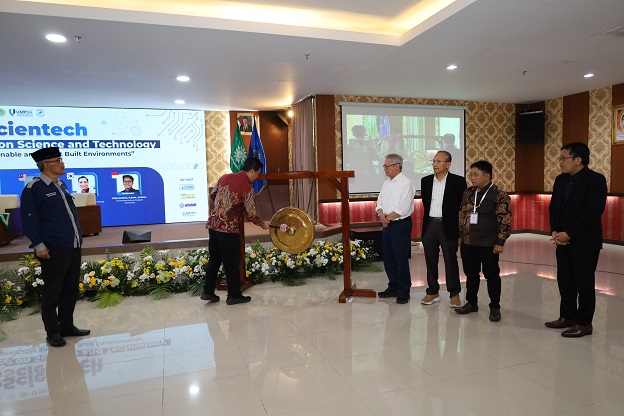
Initiated by the Faculty of Engineering and the Faculty of Computer Science and Digital Technology (FIKOMDIGI), the event was attended by UNIMUS Vice Rector IV Muhammad Yusuf, S.STP., M.Si., Ph.D.; the Dean of the Faculty of Engineering, Dr. Ir. Syamsudi Rahardjo, S.T., M.M.; the Dean of FIKOMDIGI, Dr. Munsyarif, S.Kom., M.Kom.; lecturers, students and participants from various universities. ISOSCIENTECH 2026 also featured keynote and invited speakers from Indonesia, Malaysia and South Korea, who shared their experiences, research findings and views on the challenges and opportunities of technological development globally.
The conference chair, Prof. Dr. Edi Winarno, explained that ISOSCIENTECH is designed as an academic forum where researchers and practitioners share research results, scientific ideas, technological innovations and practical solutions that benefit society.
“In this second edition, we hope ISOSCIENTECH will continue to grow into a sustainable international forum, not only strengthening scientific publications but also encouraging innovation and wider collaboration between universities, professional associations, researchers and practitioners,” he said.
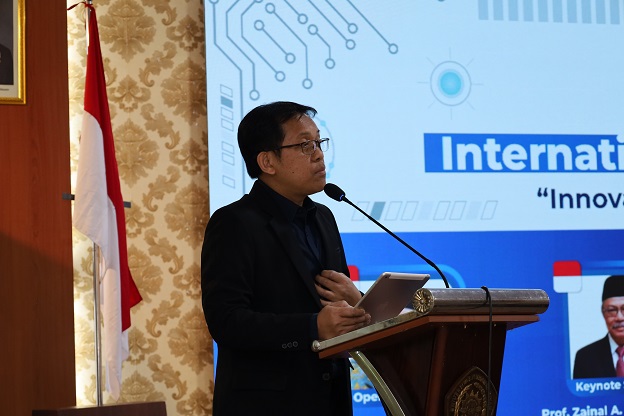
Besides the plenary session with the main speakers, the conference continued with parallel sessions in which researchers presented their findings, innovations and other scientific contributions relevant to science and technology. The organizers encouraged participants to discuss actively, exchange ideas, give constructive feedback and explore opportunities for research collaboration across institutions and countries.
Prof. Edi said the strength of a scientific conference lies not only in the number of papers presented but also in the quality of discussion and the academic networks it builds. Forums like this give rise to research cooperation, joint publications and new innovations.
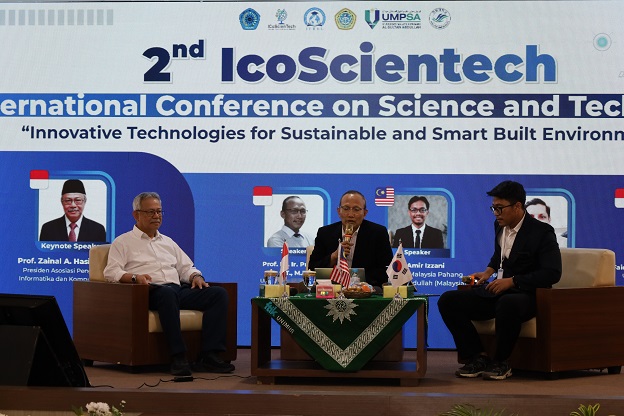
In addition to the scientific conference, ISOSCIENTECH 2026 included a Scientific Journal Management Workshop held in cooperation between the Association of Informatics and Computer Journal Managers (APJIKOM) and Universitas Muhammadiyah Semarang.
The workshop featured national experts who discussed editorial governance, the peer review process, publication ethics, indexing strategies and building internationally reputable journals. Participants are expected to improve their capacity to manage high-quality, globally competitive scientific journals.
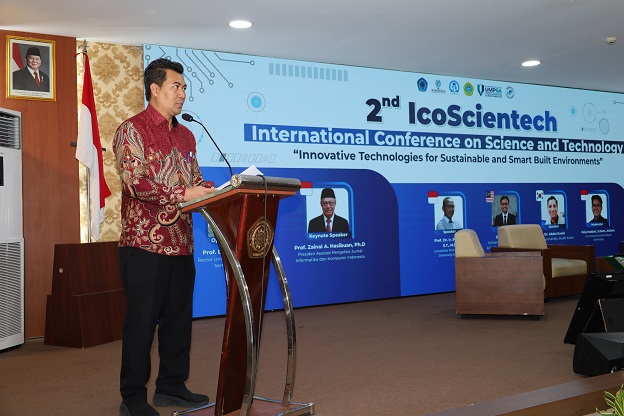
In his remarks, UNIMUS Vice Rector IV Muhammad Yusuf, S.STP., M.Si., Ph.D., said developments in digital technology and engineering have changed almost every aspect of life, from the way people learn and work to the way they innovate.
“Technological development brings both challenges and opportunities. Our challenge is to ensure technology is developed responsibly, ethically and sustainably. The opportunity is to build collaboration that produces innovative solutions for society,” he said.
He added that UNIMUS has put this commitment into practice through institutional strengthening, including the establishment of the Faculty of Computer Science and Digital Technology (FIKOMDIGI) as a separate faculty that works closely with the Faculty of Engineering in technology-based education, research and innovation.
“FIKOMDIGI and the Faculty of Engineering have a strategic role in strengthening collaborative research, encouraging digital innovation and producing graduates ready for the challenges of industry and future digital transformation,” he explained.

Muhammad Yusuf hopes ISOSCIENTECH will continue to be an international academic forum that brings researchers, academics, practitioners and students together to share knowledge, expand collaboration and produce innovations with a real impact on sustainable development.
Through ISOSCIENTECH 2026, UNIMUS reaffirms its position as a university that actively builds global academic networks, improves the quality of scientific publications and encourages research and innovation that respond to the challenges of modern technology.