

Semarang | On 17 October 2026, Semarang City became the focus of the international medical community through The 10th Annual Meeting of the Asian Society of Cryosurgery (ASC-10), held by Universitas Muhammadiyah Semarang (UNIMUS) and UNIMUS Hospital at PO Hotel Semarang on 17–18 October 2026. The prestigious scientific congress offered a forum for knowledge exchange across countries, with international representation reported to cover 30 countries, to discuss developments in cancer treatment technology, from cryosurgery and precision medical imaging to the use of robotics.

As host, UNIMUS showed its ability to bring together international scientists, professors, specialist doctors, researchers and health practitioners. The congress was also a strategic moment for the development of UNIMUS Hospital Cancer Care and the expansion of the UNIMUS Faculty of Medicine’s global academic network.
The forum’s international reach covered Southeast Asia, East Asia, South Asia, Central Asia, West Asia and Europe. According to the list of representation provided by the organizers, the 30 countries were Indonesia, Malaysia, Singapore, Thailand, the Philippines, Vietnam, Myanmar, Cambodia, Laos, Brunei Darussalam, Timor-Leste, China, Japan, South Korea, North Korea, India, Pakistan, Bangladesh, Saudi Arabia, Türkiye, the United Arab Emirates, Iran, Russia, Kazakhstan, Uzbekistan, Iraq, Qatar, Lebanon, Syria and Austria.
This diversity of representation shows the breadth of the international network connected through ASC-10. The meeting was an important forum for discussing the challenges of cancer treatment and presenting technological developments with the potential to widen treatment options for patients.
The Rector of UNIMUS and Executive Chairman of ASC-10, Prof. Dr. Masrukhi, M.Pd., said being entrusted with hosting an international congress was both an honour and an opportunity for UNIMUS and UNIMUS Hospital to strengthen their contribution to health technology development.
“It is a great honour for UNIMUS and UNIMUS Hospital to be trusted to host the prestigious 10th ASC scientific conference. This appointment reflects global recognition of our commitment to advancing health technology, especially cancer treatment through precise cryosurgery methods,” said Prof. Masrukhi, as stated in the event’s press release.

Hosting ASC-10 is one of UNIMUS’ concrete steps in connecting the development of knowledge with the needs of health services. Through international collaboration, the university seeks to open opportunities to strengthen medical education, clinical research and the competence of health workers.
ASC-10 featured a number of international figures and experts who have contributed to the development of cryosurgery and cancer treatment.
One of them was Prof. Xu Kecheng, a cryosurgery expert from China, who presented The Present and Future of Cryosurgery. In this session, the development and future direction of cryosurgery technology were among the congress’s key topics.
Besides Prof. Xu Kecheng, the congress also featured Prof. Nikolai N. Korpan, Prof. Xiao Yueyong and Prof. Li Jiaping, who served as Congress President of ASC-10.
Prof. Xiao Yueyong discussed the use of cryoablation for liver cancer, while Prof. Li Jiaping presented a study on the safety and effectiveness of CT-guided cryoablation for recurrent retroperitoneal soft tissue sarcoma.

The scientific forum also discussed the treatment of breast cancer through cryosurgery, the development of image-guided intervention technology and the use of robotics in medical procedures.
The presence of these experts opened opportunities to exchange clinical experience, discuss developments in scientific evidence and strengthen research cooperation across countries.
One of the technologies drawing the most attention at ASC-10 was cryoablation, a procedure that uses very low temperatures to destroy abnormal tissue in a targeted way.
In clinical practice, cryoablation can be used for certain tumours depending on indications, the patient’s condition and the medical team’s judgement. The approach is part of the development of minimally invasive therapies that continue to be researched and developed in cancer treatment.
Besides cryosurgery, the international forum also discussed medical imaging technology that supports procedural precision, CT-guided interventions, developments in bronchoscopy and the use of robotic systems in medical procedures.

These discussions show that cancer treatment increasingly requires a multidisciplinary approach that combines clinical expertise, technology, research and international collaboration.
For UNIMUS and UNIMUS Hospital, hosting ASC-10 was of strategic significance because it coincided with the launch of UNIMUS Hospital Cancer Care, part of the development of cancer services based on modern medical technology.
The service is aimed at strengthening a multidisciplinary approach to cancer treatment, including through cryosurgery technology and other minimally invasive innovations.
Through ASC-10, UNIMUS Hospital had the opportunity to present the direction of its services to a network of international experts and to widen opportunities for collaboration in education, research and health services.
The occasion was further strengthened by the appointment of Prof. Xu Kecheng and Prof. Yenni Thamrin, MHA, Chairman of the Indonesia Diaspora Network-China, as homebase lecturers in the UNIMUS Faculty of Medicine.
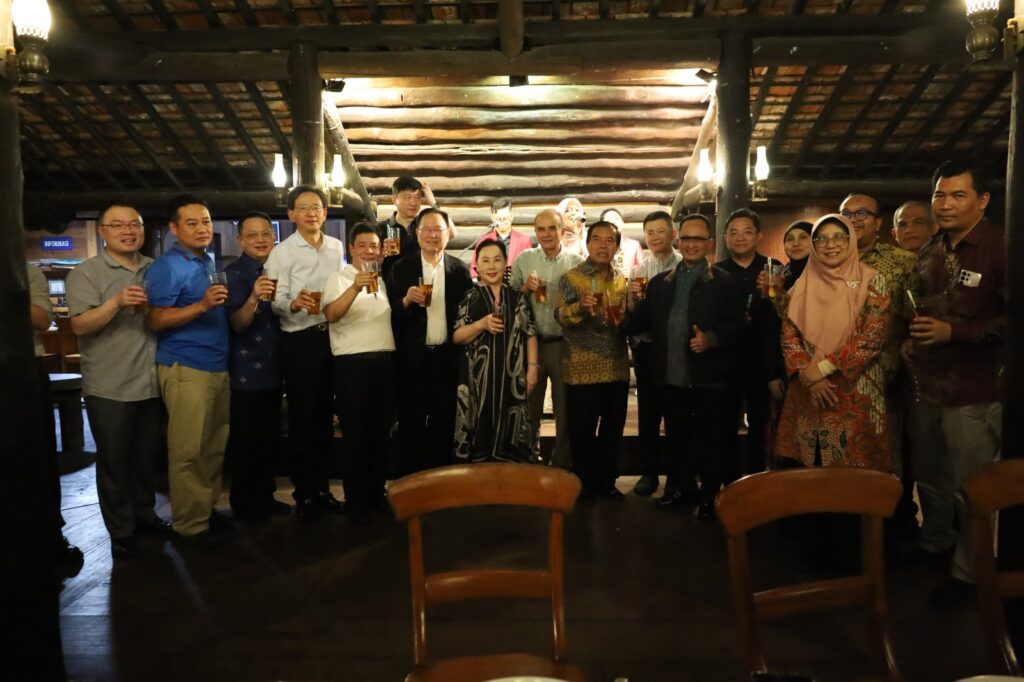
The two figures are expected to strengthen human resource development, knowledge transfer, and international academic and health service networks.
Hosting ASC-10 in Semarang shows the potential of Indonesian universities to host international scientific forums and to be partners in developing health technology.
As a university accredited Unggul (Excellent), UNIMUS continues to strengthen collaboration between academia, research and health services through a range of strategic initiatives.
With the support of the Faculty of Medicine and UNIMUS Hospital, the international congress is expected to be a gateway to collaborative research, greater competence among health workers and stronger evidence-based cancer services.
Through ASC-10, UNIMUS and UNIMUS Hospital affirm their commitment not merely to follow global developments in health technology but to play an active role in bringing world expertise together with the education and health service needs of the Indonesian people.