

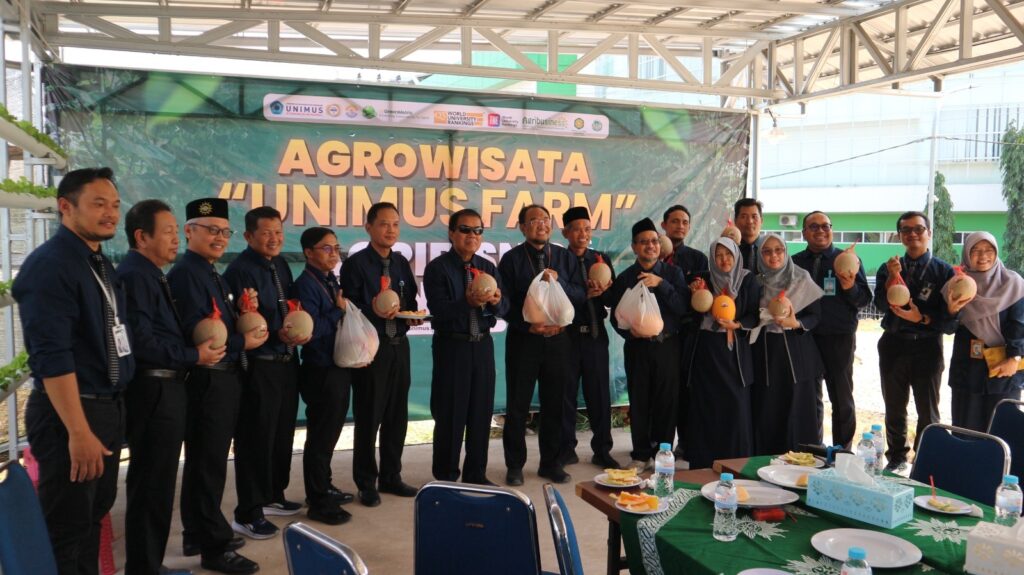
Semarang | 13 July 2026 – Universitas Muhammadiyah Semarang (UNIMUS) continues to strengthen its commitment as a Green Campus by developing a productive agrotourism area. This was marked by the first harvest of imported melon varieties on Monday (13/7) at UNIMUS Farm, located east of Universitas Muhammadiyah Semarang Hospital (RS UNIMUS).
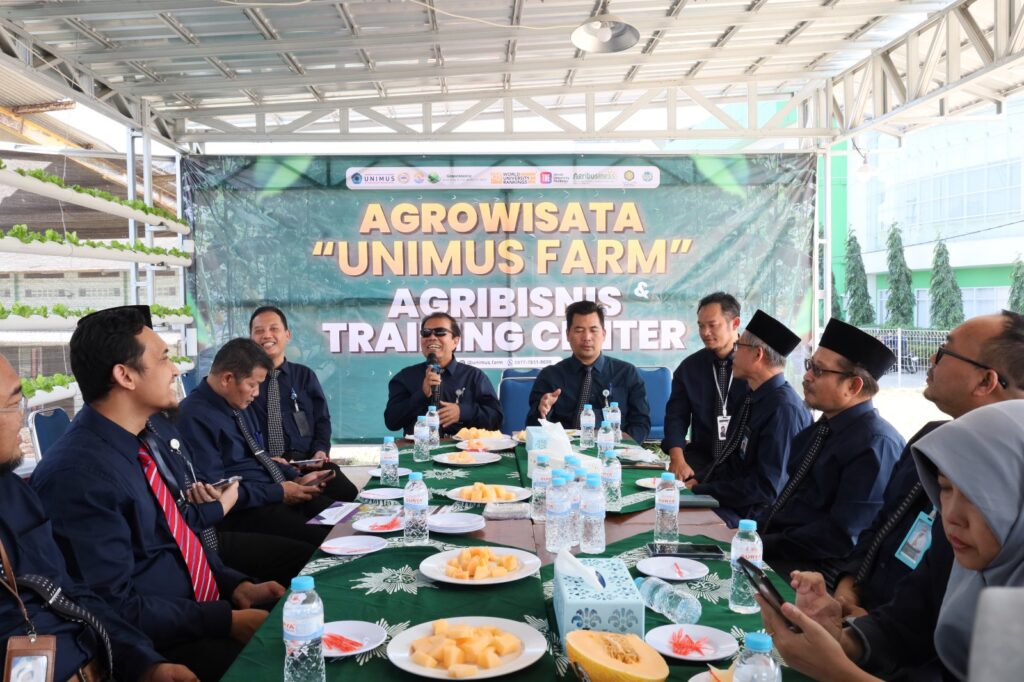
The first harvest marks the start of the UNIMUS Farm Agrotourism area, a collaboration between the UNIMUS Agribusiness Study Program and PT Surya Ultima Nasional (PT SUN UNIMUS). Besides supporting food security, the area is planned to become an educational tourism destination, a training centre and a healing area integrated with hospital services.
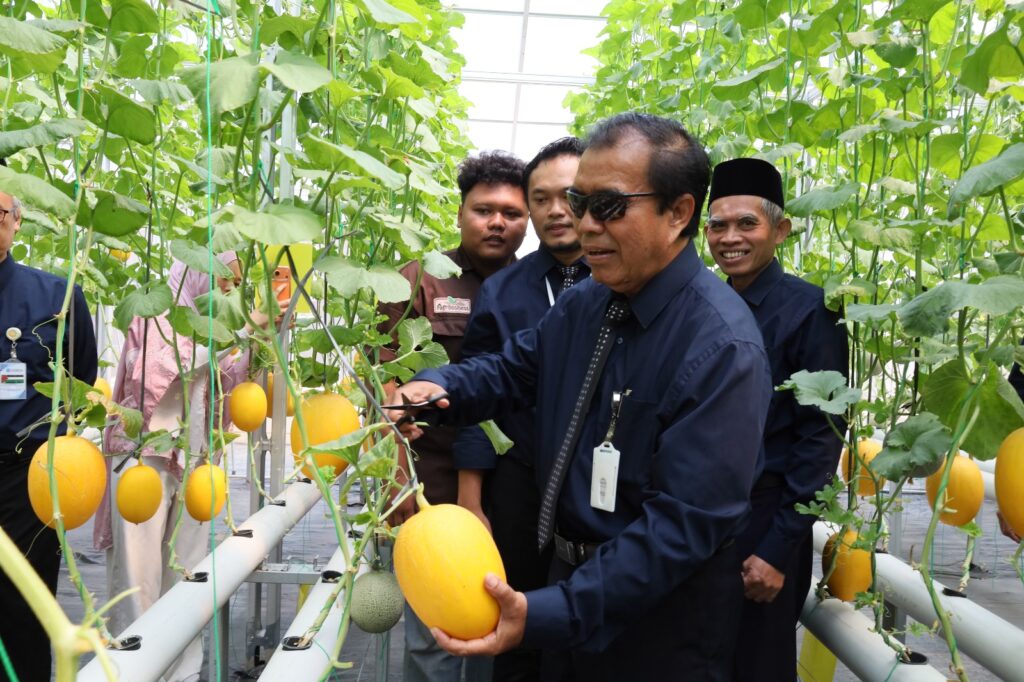
At the first harvest, the Rector of UNIMUS, Prof. Dr. Masrukhi, M.Pd., personally picked a Lavender melon, one of the three premium varieties grown: The Blues, Lavender and Red Aroma. All plants were harvested after a growing period of about 70 days from planting.
“Alhamdulillah, today Universitas Muhammadiyah Semarang held its first harvest of imported melons. We planted three varieties, The Blues, Red Aroma and Lavender. It takes about 70 days from planting to harvest. This is a new UNIMUS project that we are developing with the Agribusiness Study Program and PT SUN UNIMUS,” said Prof. Masrukhi.
He said the agrotourism area has not only economic value but is also part of the Green Campus concept UNIMUS has been developing. The university, which has achieved various results in the UI GreenMetric rankings, is committed to creating a campus environment that is green, productive and beneficial to the community.
“We are preparing this area to support food security and educational tourism and to serve as a place for healing. It is next to the hospital, so patients and the public will be able to enjoy the green surroundings and see the melon garden. In the future we will develop other plots on campus so that it becomes an even more attractive area,” he explained.
The Rector also stressed that developing green open space at UNIMUS is not only about planting trees and gardens but also about using land productively in ways that have educational value.
“When people come to UNIMUS, God willing, they will enjoy a campus full of gardens and trees, and now melon gardens too. This is part of the Green Campus identity we are building sustainably,” he added.
UNIMUS Vice Rector IV, Dr. Muhammad Yusuf, Ph.D., explained that the area implements a Green Campus concept based on productive educational tourism. The university aims to turn all its land into spaces that provide ecological benefits and generate economic value.
“This is part of developing the Green Campus through educational tourism. We want every space on campus to become productive land. It starts with a collaboration between the Agribusiness Study Program and PT SUN UNIMUS, but in the future more study programs will be involved so that the land is used to its full potential,” he said.
Dr. Muhammad Yusuf said the area will continue to be developed into an integrated agrotourism ecosystem. In addition to melons and vegetables, there are plans for a hydroponics area, small-scale livestock education and integration with the waqf forest that UNIMUS already owns.
“We do not just want greenery; we want to create an area that is productive and can generate revenue for the university. We hope the whole UNIMUS campus will become a green, integrated, educational and productive environment,” he explained.
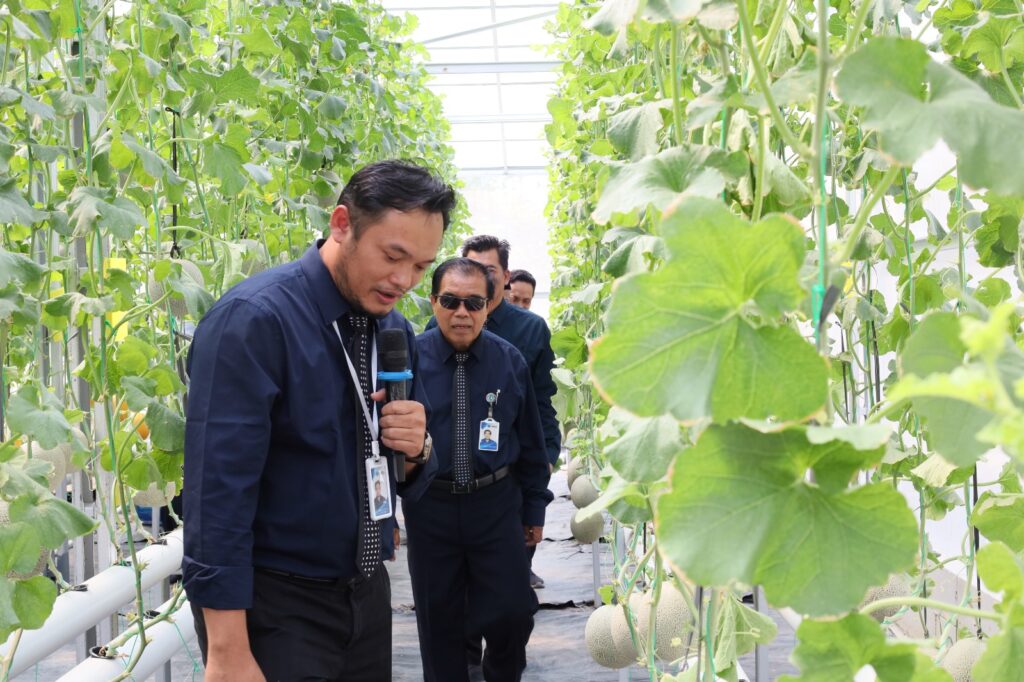
The Director of PT Surya Ultima Nasional (PT SUN UNIMUS), Ali Khamdi, said this first planting season had about 1,050 melon plants, of which about 1,000 were successfully harvested after accounting for plants that did not grow well. Production is estimated at 1.5 to 2 tonnes per harvest.
“We grow three premium varieties: The Blues, Lavender and Red Aroma. Each fruit weighs between one and three kilograms on average. It takes about 70 days from planting to harvest, so up to four planting seasons a year are possible,” he explained.
Ali Khamdi added that the area will not stop at melon cultivation. In the future, UNIMUS Farm Agrotourism will be developed into an Agribusiness Training Center open to students and the general public.
“We hope this area will become a place to learn modern farming, hydroponics, fertilizer production and other agricultural innovations. Besides supporting students’ learning, the public can also benefit from the education it offers,” he said.
UNIMUS also plans to expand the agrotourism area with various educational attractions, including vegetable and melon hydroponics, an educational livestock area and landscape improvements to make it a comfortable destination for family outings, learning and institutional visits.
Through UNIMUS Farm Agrotourism, Universitas Muhammadiyah Semarang affirms its commitment to integrating education, research, community service, food security, environmental sustainability and economic empowerment in one innovative campus ecosystem. The initiative is expected to become a new icon of UNIMUS as a campus that excels not only academically but also in real innovations that benefit the wider community.