

Semarang | Universitas Muhammadiyah Semarang (UNIMUS) continues to strengthen its role in advancing Muhammadiyah education in Central Java. This commitment was demonstrated through a Workshop on Mentoring Not-Yet-Self-Reliant Muhammadiyah Schools and Madrasahs in Central Java, held on Monday (11/5/2026) on the UNIMUS campus.
The workshop brought together various elements of the Muhammadiyah organization, the Council for Primary, Secondary and Non-Formal Education (Dikdasmen and PNF), Muhammadiyah universities, and principals and managers of Muhammadiyah schools and madrasahs from across Central Java. Participants came from primary (SD/MI), junior secondary (SMP/MTs) and senior secondary (SMA/SMK/MA) levels.
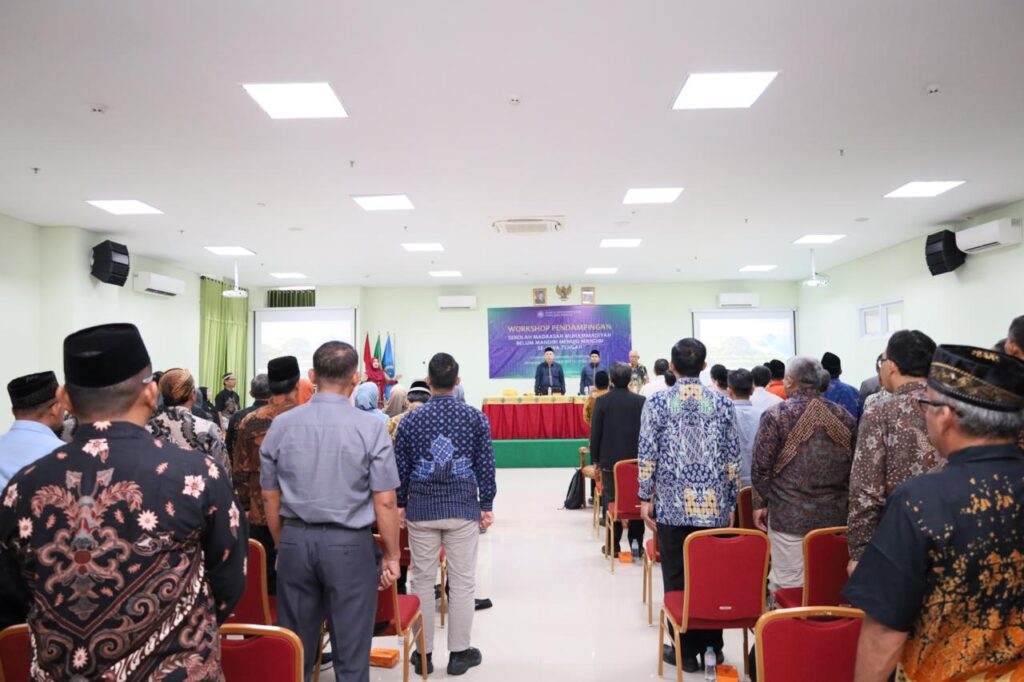
The activity was part of a joint effort to strengthen Muhammadiyah schools that still face challenges in governance, institutional development and competitiveness. Through the forum, participants not only received training but also had the opportunity to discuss and share experiences on how to develop their schools into self-reliant institutions trusted by the public.
The Deputy Chair of the Dikdasmen and PNF Council of the Central Java Muhammadiyah Regional Board (PWM), Mifbahuddin, S.KM., M.Kes., stressed that mentoring not-yet-self-reliant Muhammadiyah schools is a strategic agenda that requires a shared commitment.
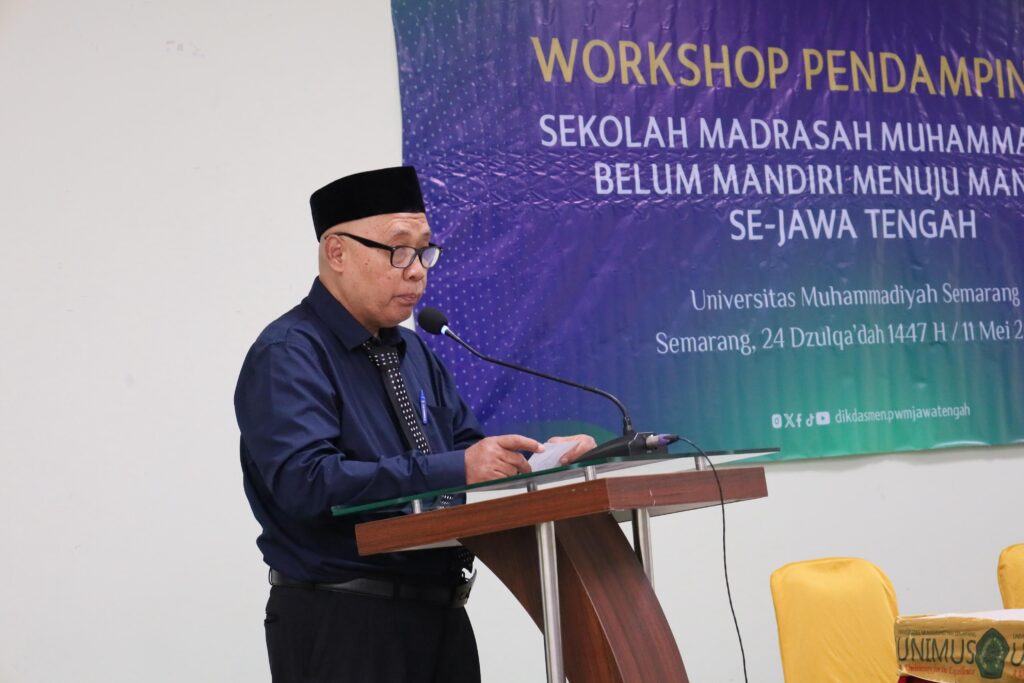
In his view, Muhammadiyah schools that are not yet self-reliant should not be left to struggle alone. All elements of the organization must provide support, mentoring and reinforcement so that these schools can grow into healthy, advanced educational institutions trusted by the public.
“Schools that are not yet self-reliant must continue to be encouraged, mentored and supported together so that they can grow into self-reliant schools,” he said.
He revealed that around 30 percent of Muhammadiyah schools in Central Java are still not self-reliant. One common indicator is a student body of fewer than 100 pupils. This situation, he said, requires serious attention through measured and sustainable strategic steps.
He said these schools cannot develop on their own. Support from all parts of the organization, from Muhammadiyah leaders, the Dikdasmen and PNF Council and universities to fellow schools, is essential for improving the quality of educational services.
“Schools that are not yet self-reliant must continue to be encouraged, mentored and supported together so that they can grow into self-reliant schools,” he said.
He explained that around 30 percent of Muhammadiyah schools in Central Java currently fall into the not-yet-self-reliant category. One indicator is having fewer than 100 students. This shows the need for more targeted, sustained mentoring based on each school’s needs.
The mentoring covers not only administration but also stronger school management, better educational services, human resource development and strategies for building a positive school image amid increasingly competitive education.
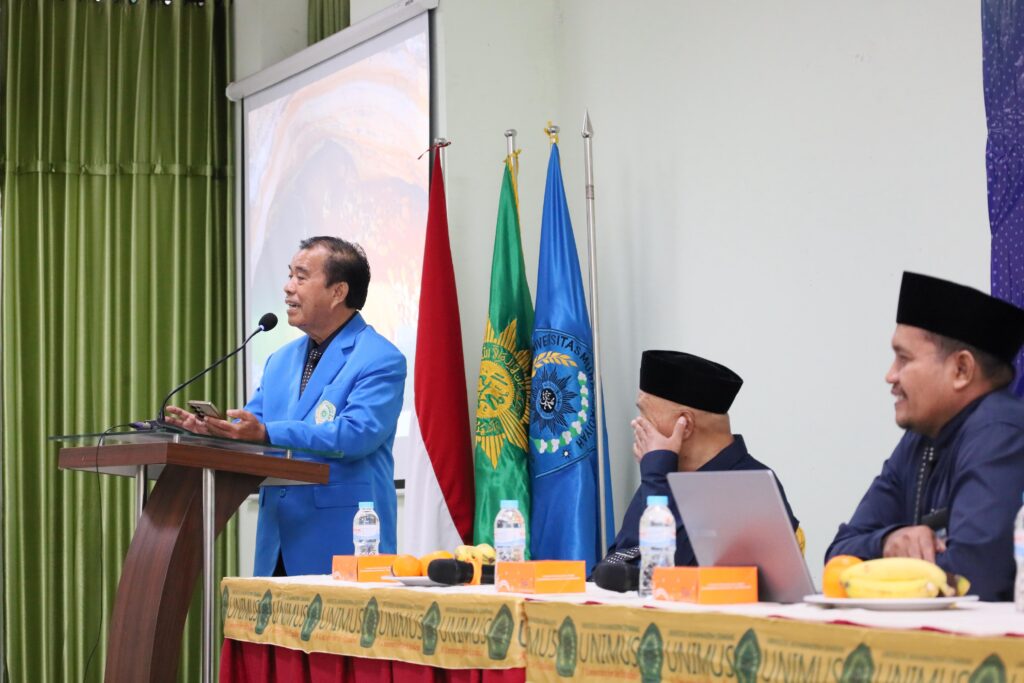
The Rector of Universitas Muhammadiyah Semarang, Prof. Dr. Masrukhi, M.Pd., who opened the event and delivered the keynote address, emphasized that the success of private schools depends heavily on public trust.
He said parents now consider not only academic quality when choosing a school but also a comfortable learning environment, cleanliness, safety and professional school management.
“How can we convince the public that Muhammadiyah schools are a good educational choice for their children? It starts with tidiness, cleanliness and well-managed facilities,” he said.
Prof. Masrukhi added that conditions among Muhammadiyah schools in Central Java vary widely. Some have become leading schools, while others still need mentoring to improve their services and competitiveness.
“Muhammadiyah schools must offer quality, comfort and excellent educational services. When the public trusts them, schools will grow naturally,” he added.
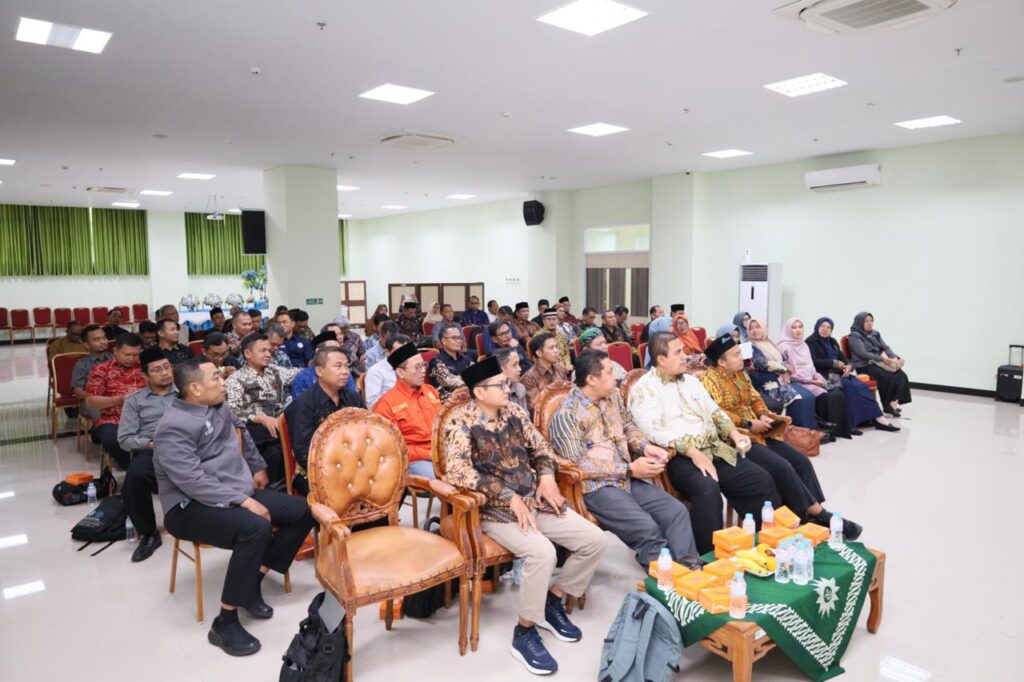
Besides presentations, the workshop included a good-practice sharing session led by Rohmat Suprapto, S.Ag., M.Si. In this session, participants learned strategies for institutional strengthening, experiences in school mentoring and examples that can be applied to each school’s situation.
The discussion was interactive. Participants raised issues ranging from low enrolment, school branding and learning innovation to better management of resources. The forum also became a shared learning space for finding solutions that can be applied in practice.
The workshop is expected to strengthen the capacity of principals and education managers by broadening their understanding of school development strategies, institutional governance and ways to build public trust in Muhammadiyah schools.
It is also expected to produce follow-up plans at each participating school, from improving management and the quality of educational services to developing promotion strategies and strengthening school identity. Mentoring is expected to continue through collaboration between the Dikdasmen and PNF Council, Muhammadiyah universities and the mentored schools.
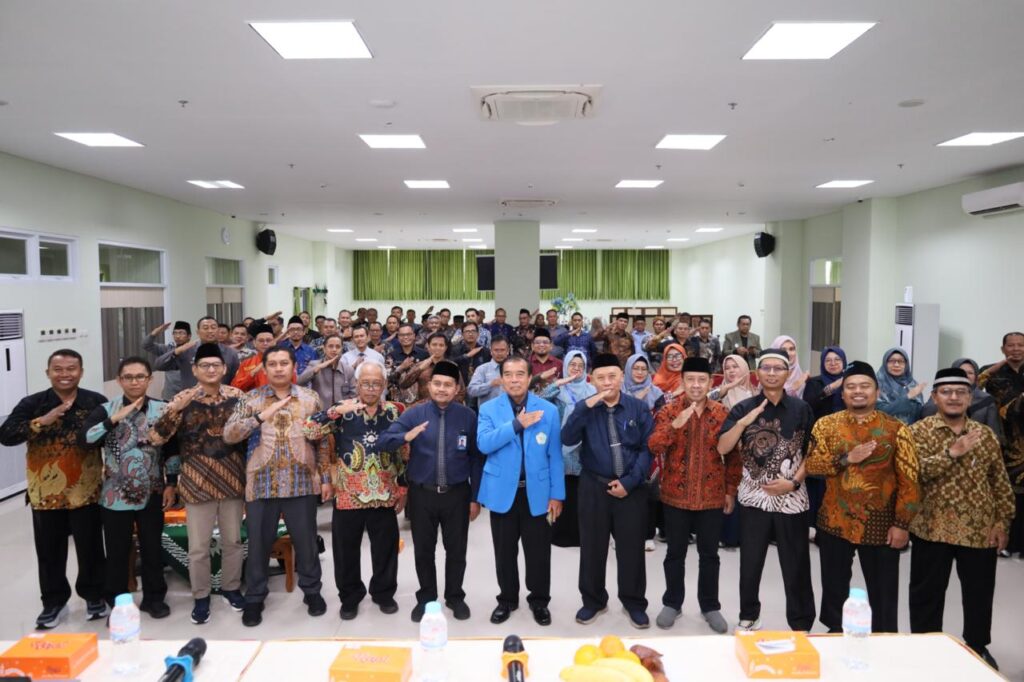
In the long term, the program is expected to increase the number of Muhammadiyah schools that become self-reliant, with professional governance, growing public trust and the ability to compete with other educational institutions. UNIMUS’ involvement in the program also confirms its role as a strategic partner that not only produces graduates and research but also contributes directly to strengthening the Muhammadiyah education ecosystem.