




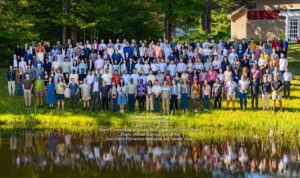
Semarang, unimus.ac.id – Fatkhurokhman Fauzi, S.Si., M.Stat., a lecturer in the Statistics Study Program at Universitas Muhammadiyah Semarang (UNIMUS), presented early results of research on the relationship between plant photosynthetic activity and rice production on the island of Java at the Climate Engineering – Gordon Research Conference 2026. The international scientific forum took place from 21 to 26 June 2026 at the Grand Summit Hotel at Sunday River, Newry, Maine, United States, with the theme Bridging Observations, Models, and Impacts in Solar Radiation Modification Research.

His research, presented as a scientific poster, is titled Hydroclimatic Controls on Solar-Induced Chlorophyll Fluorescence under Climate Change and Solar Radiation Management Scenarios in Java. The study uses satellite data on chlorophyll fluorescence, a light signal that plants emit during photosynthesis, as an indicator of vegetation conditions. The research is funded by the Degrees Modelling Fund with support from the Degrees Initiative in the United Kingdom.
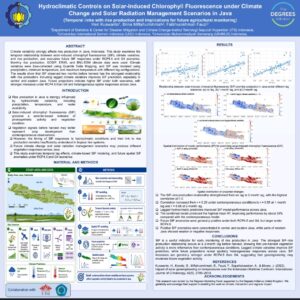
One early finding is that the vegetation signal is most closely linked to rice production when observed two months before harvest. The correlation coefficient rises from 0.20 with no time lag to 0.68 with a two-month lag, and a model that includes lagged climate variables improves prediction accuracy by about 33 percent. This finding opens up opportunities for early monitoring of rice harvests. Future projections under the RCP4.5 climate scenario and the G4 climate engineering simulation scenario show varied vegetation responses across Java: they tend to be positive in Central and East Java, while parts of West Java show weak or negative responses. The researchers stress that these are still early results and do not mean that climate engineering benefits agriculture.
Research that uses data and statistical modelling to understand food risks shows how the academic work of UNIMUS lecturers connects with real problems facing society, namely rice production on Indonesia’s most densely populated island.
Originally published in Indonesian on unimus.ac.id.