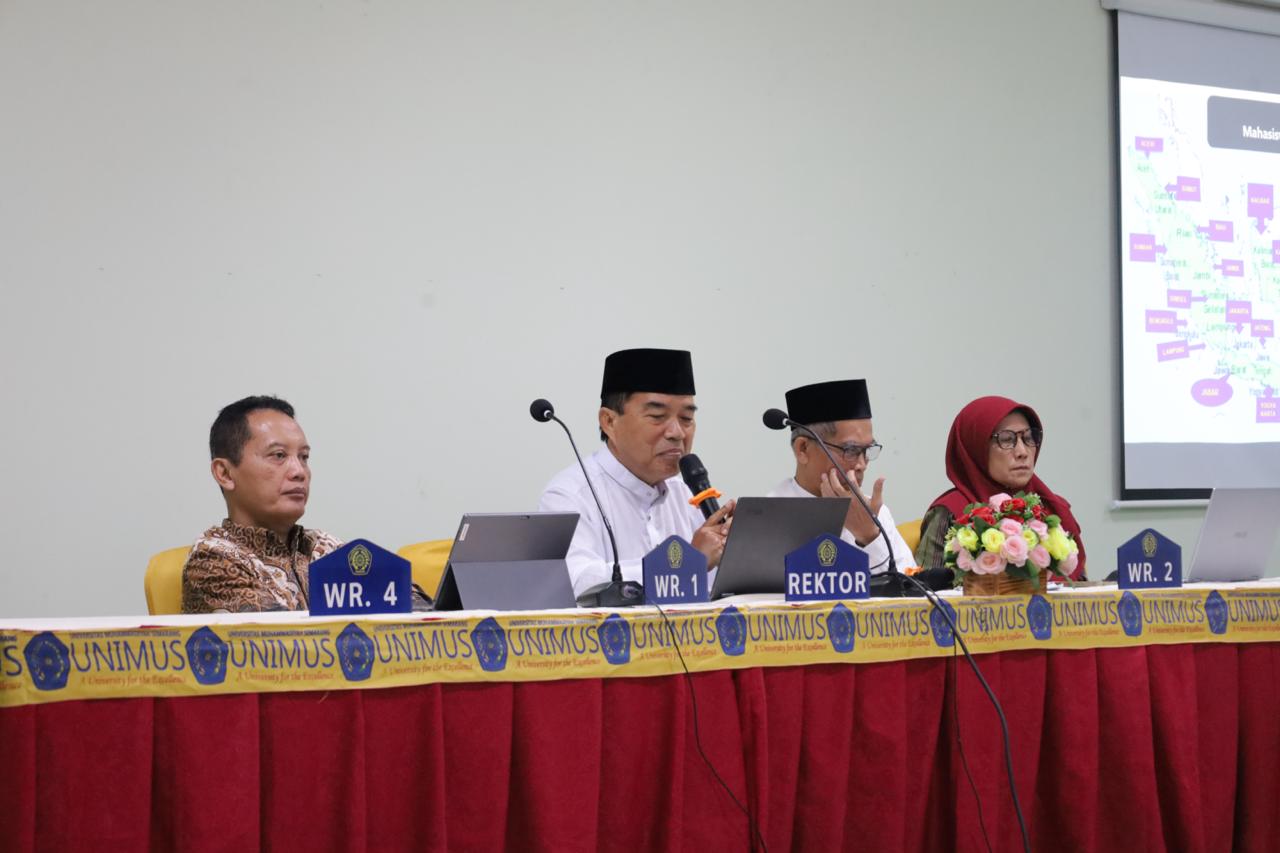
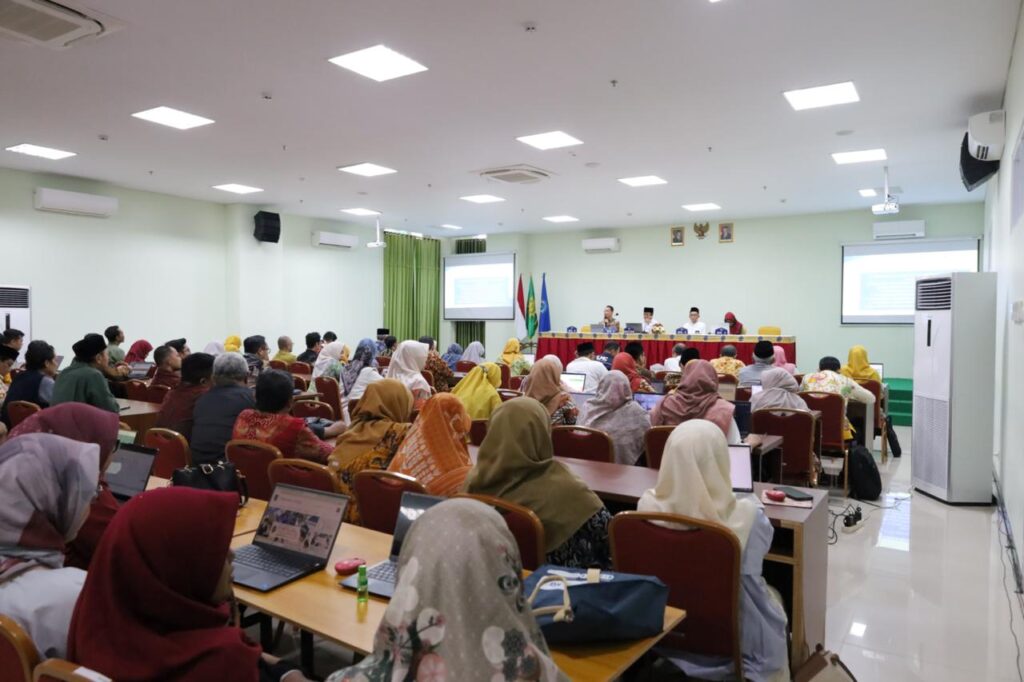
Semarang | Universitas Muhammadiyah Semarang (UNIMUS) continues to intensify its strategic efforts to achieve World-Class University status by enhancing institutional quality and actively participating in various international university rankings. This was conveyed during the university leadership meeting attended by the Rector, Vice Rectors I to III, and other university leaders. The meeting focused on reviewing UNIMUS’ progress in global rankings and formulating strategies to strengthen academic governance and institutional management.
This leadership forum served as a strategic platform to present institutional achievements, evaluate work programs, and design future steps to enhance UNIMUS’ academic reputation at both national and international levels. Vice Rector I, Prof. Dr. Budi Santosa, M.Si., Med, explained that global university rankings have become a key indicator in measuring institutional quality and competitiveness worldwide. The rankings prioritized by UNIMUS include UI GreenMetric, QS Asia Rankings, and Times Higher Education (T.H.E).
Each ranking system applies different indicators. UI GreenMetric emphasizes sustainability, including campus layout, green open spaces, eco-friendly infrastructure, energy efficiency, and waste management. QS Asia Rankings focus on academic reputation and internationalization, including academic reputation, employer reputation, international networks, and global collaborations. Meanwhile, THE evaluates universities based on three core aspects: teaching, research, and global impact.
Recently, UNIMUS achieved a significant milestone in the UI GreenMetric ranking, securing 59th place globally among approximately 592 universities. Regionally, UNIMUS ranked 2nd among private universities in Central Java. Within the Muhammadiyah and ‘Aisyiyah Higher Education institutions (PTMA), which consist of around 162 institutions, UNIMUS ranked 6th overall and became the top PTMA in Central Java.
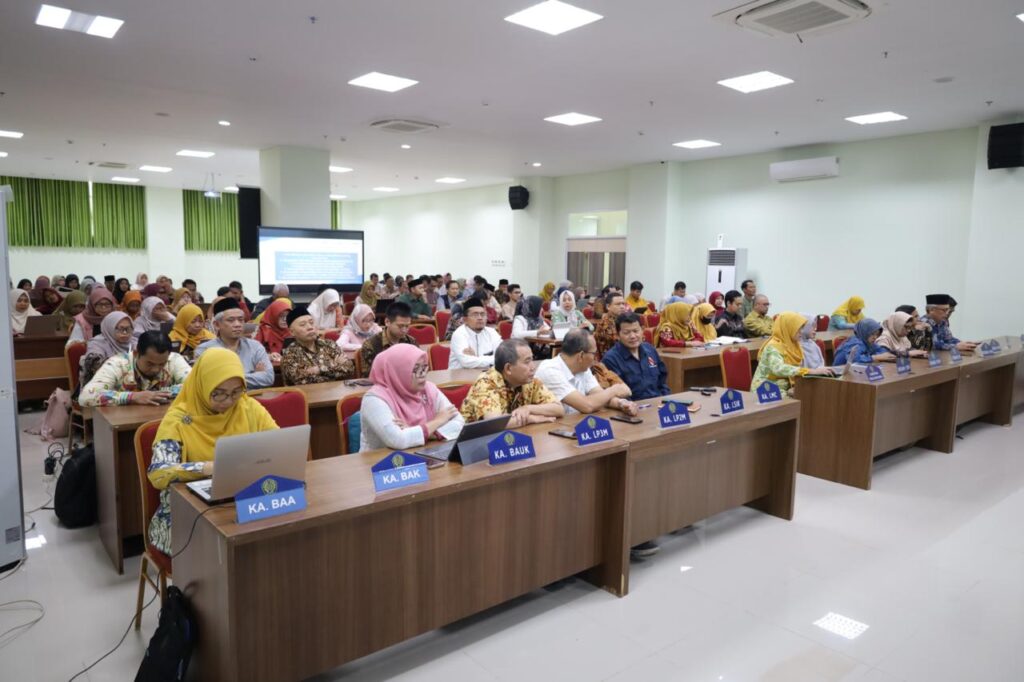
According to Prof. Budi Santosa, this achievement is the result of collective efforts from the entire academic community, particularly the significant contributions of the Institute for Research and Community Service (LP2M), which plays a central role in driving research and community engagement activities.
As part of its strategy toward becoming a world-class university, UNIMUS has prepared several institutional strengthening programs, including developing an integrated institutional data system to support global rankings, positioning research as the primary driver of academic reputation, and strengthening postgraduate programs, including doctoral pathways.
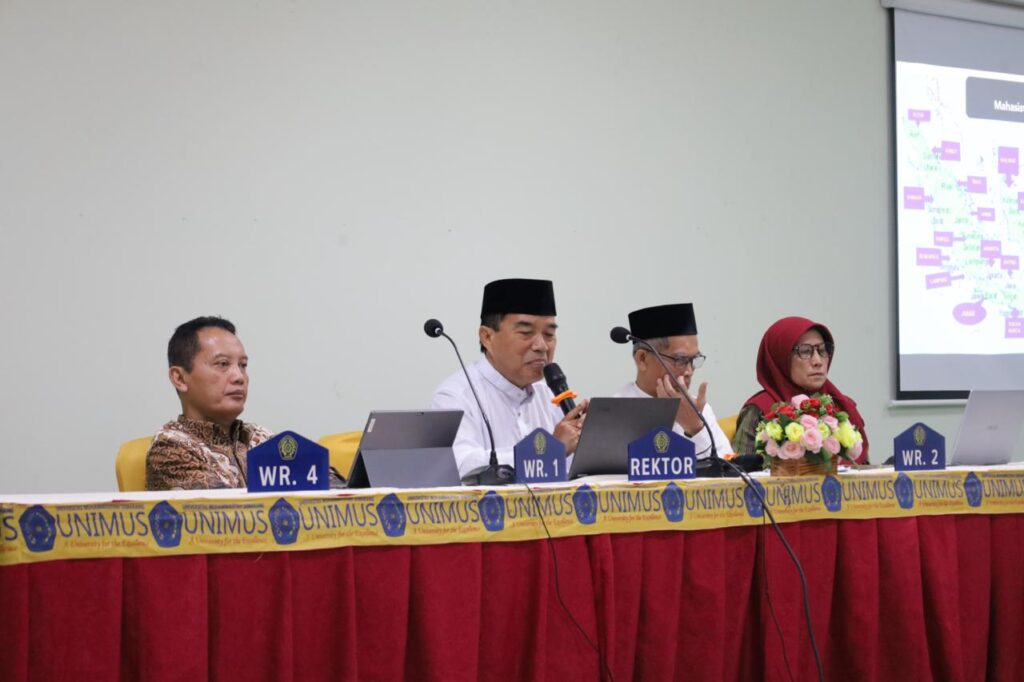
In addition, UNIMUS continues to promote the internationalization of academic activities, enhance the quality and capacity of lecturers, strengthen graduate competitiveness through industry collaboration, and establish sustainability as a core institutional identity. These strategies will be implemented gradually through a structured development roadmap.
The Rector, Prof. Dr. H. Masrukhi, M.Pd, also highlighted academic developments, including the opening of several new study programs as part of strengthening institutional capacity. These include undergraduate programs in Artificial Intelligence, Visual Communication Design, Business Law, Professional Dietitian Education, Specialist Medical Education in Obstetrics and Gynecology, Master’s programs in Management and Informatics, and a Specialist Program in Medical-Surgical Nursing.
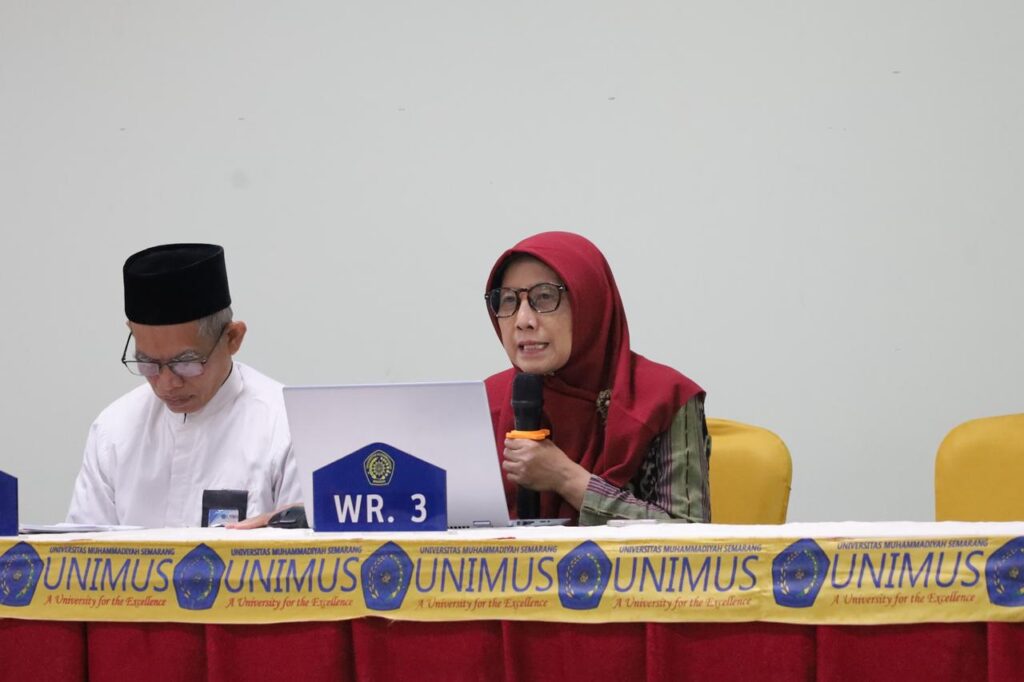
According to the Rector, these programs are strategic responses to the rapid development of science, technology, and the evolving needs of industry and healthcare services. He also reminded all units to adjust operational activities during national holidays and Eid al-Fitr in accordance with government policies, including Work From Anywhere (WFA), collective leave, and national holidays.
The meeting also highlighted that as of December 2025, UNIMUS students come from across Indonesia, from Aceh to Papua, indicating the university’s growing national recognition. The university remains committed to providing the best educational services to all students.
Meanwhile, Vice Rector III, Dr. Eny Winaryati, M.Pd, emphasized the importance of student character development through strengthening leadership, discipline, and academic motivation. Lecturers are expected to continuously mentor and motivate students to help them overcome academic and social challenges.
With these achievements and strategic initiatives, UNIMUS is optimistic about continuously improving its academic reputation and strengthening its global contribution as a competitive international university.