Our actions and goals

Click the SDG Goals to read the initiatives

SDG 3 : GOOD HEALTH AND WELL-BEING

SDGS 3 Report 2025

ANEMIA-FREE MENTORING PROGRAM FOR RESILIENT ADOLESCENT GIRLS AS ANEMIA PREVENTION MEASURE IN SCHOOLS

Anemia is a public health problem frequently experienced by adolescent girls. This condition is generally caused by insufficient iron intake, an unbalanced diet, and poor adherence to iron supplementation (TTD). The impacts of anemia on adolescents are diverse, ranging from decreased concentration, fatigue, decreased fitness, and impacts on academic achievement. If not addressed early, anemia can also impact adolescents’ quality of life into adulthood and even increase the risk of complications during future pregnancies.

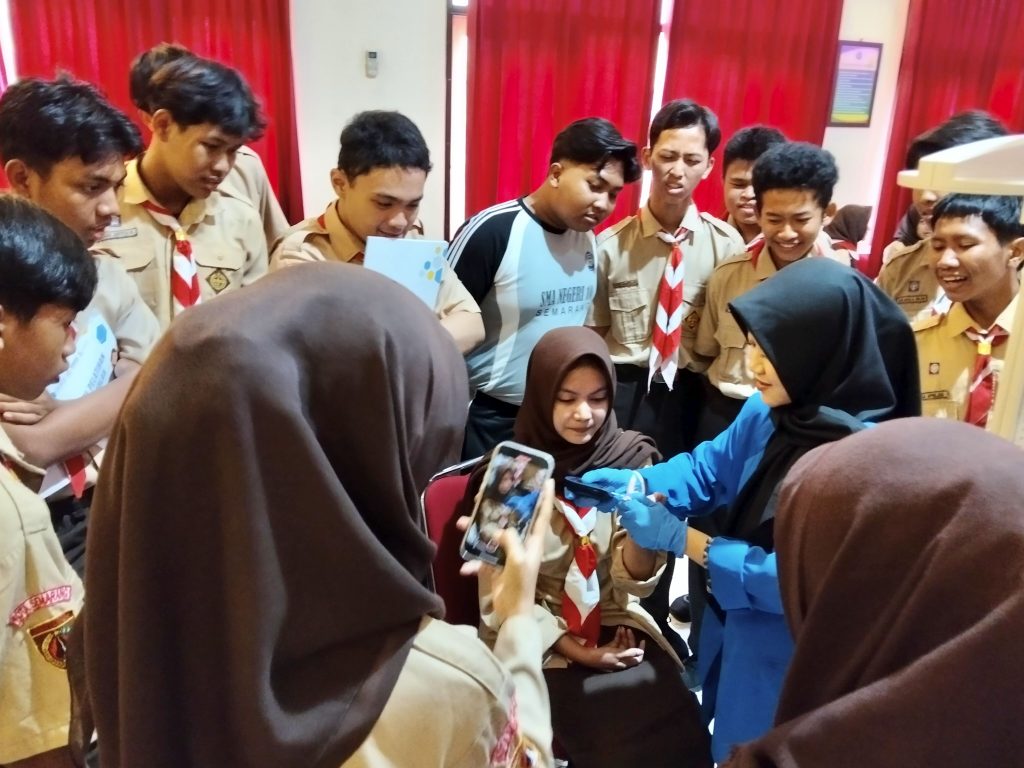
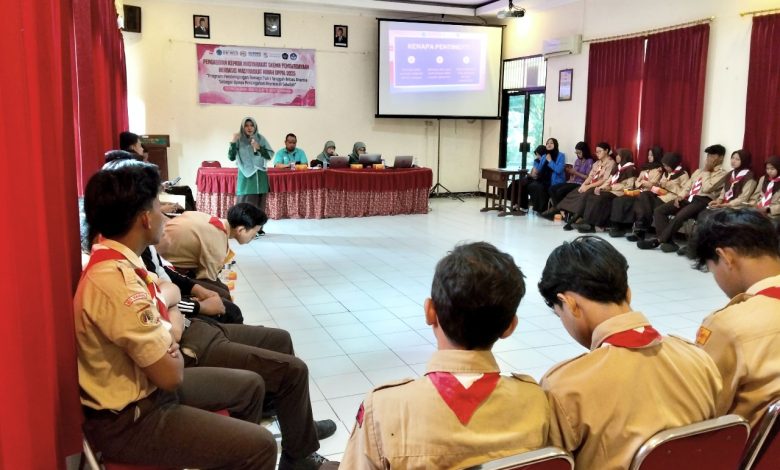
Schools are a strategic setting for anemia prevention efforts in adolescent girls, as they are the primary environment where adolescents spend most of their time. Therefore, interventions through health education, the development of a cadre of resilient adolescent girls, and ongoing mentoring are essential. Based on these issues, the community service team implemented the “Anemia-Free Mentoring Program for Resilient Adolescent Girls as an Anemia Prevention Means in Schools” program at SMA Negeri 10 Semarang. This program is part of the 2025 DPPM Kemendiktisaintek funding grant, with the aim of strengthening anemia prevention efforts in adolescent girls through educational approaches, cadre training, and intensive mentoring.

Based on initial observations, coordination with the school, and interviews with teachers and students, the following overview of the existing situation at the partner school (SMA Negeri 10 Semarang) regarding anemia in adolescent girls was obtained:

  1. Level of Knowledge of Adolescent Girls

The majority of female students lack an adequate understanding of anemia, including its causes, signs and symptoms, and prevention efforts. Knowledge is still limited to general information, thus not encouraging consistent prevention efforts.

  1. Compliance with Iron Supplement (IBT) Consumption

The IBT program has been implemented in schools, but student compliance remains low. Some of the reasons cited include boredom, mild side effects (nausea or dizziness), and a lack of ongoing support.

  1. Healthy Lifestyle and Dietary Habits

Most female students are not accustomed to maintaining a balanced diet, particularly regarding the consumption of iron-rich foods such as meat, green vegetables, and nuts. Furthermore, the habit of consuming carbonated drinks or tea after meals is still quite high, which can inhibit iron absorption.

  1. Availability of School Health Cadres

The school has a student health organization, but the role of adolescent health cadres in anemia prevention efforts is not yet optimal. Cadres have not been provided with modules or special training to strengthen their role as peer educators.

  1. School Support

The school, particularly the school health school (UKS) teachers, has demonstrated a strong commitment to the adolescent health program. However, limited resources, educational media, and systematic mentoring models hinder the sustainability of the anemia prevention program.

Existing partner conditions indicate that anemia among adolescent girls remains a critical issue requiring comprehensive intervention. Low knowledge, attitudes, and behaviors regarding anemia prevention, as well as the suboptimal role of school health cadres, are key challenges. With the program to mentor resilient, anemia-free adolescent girls, it is hoped that these issues can be addressed through educational approaches, cadre development, and systematic support from the school.

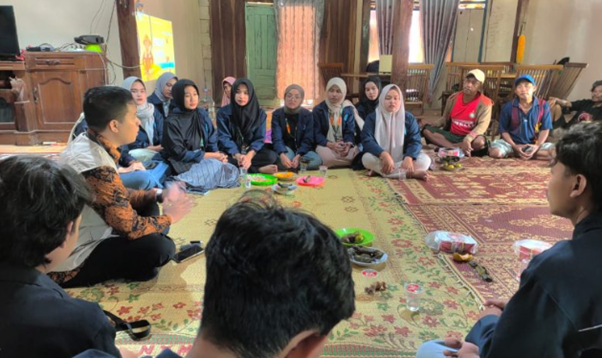
The community service program “Mentoring Resilient, Anemia-Free Adolescent Girls as an Anemia Prevention Effort in Schools” has been implemented at SMA Negeri 10 Semarang, involving female students and UKS teachers. The results of the activities were presented to teachers and school leaders so that the program received a commitment to continue running.
A WARM WATER FOOT-SOAKING POSTER BY UNIMUS STUDENTS OFFICIALLY REGISTERED AS IPR, ENGAGING ENTHUSIASM

A simple innovation emerged from the Community Service Program of students at the University of Muhammadiyah Semarang (Unimus). Unimus undergraduate nursing student Tsabita Saharani Putri Rosadani, along with Field Supervisor (DPL) Prima Trisna Aji, officially released an educational poster titled “Warm Water Foot Soaks to Lower Blood Pressure.” The poster was registered as Intellectual Property Rights (IPR) with the Indonesian Ministry of Law and Human Rights

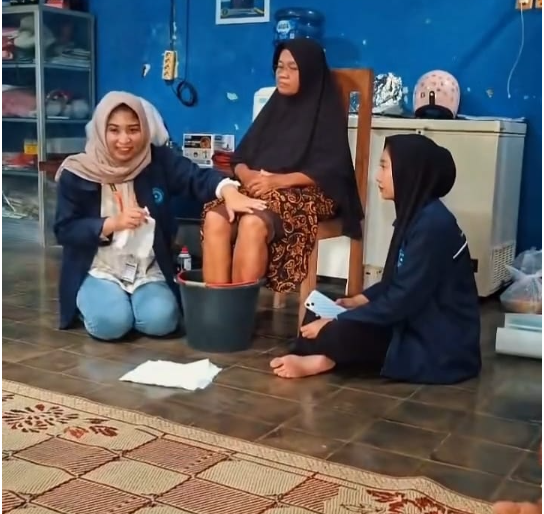
The poster is not just a visual work; it has been directly implemented with the community of Pranggong Village, Andong District, Boyolali Regency, Central Java. Tsabita and the Unimus Community Service Program team held a demonstration of the warm water foot soak therapy and provided education through a poster designed to be easy to understand, especially for elderly residents who are prone to hypertension.

“Thank God, the IPR (HKI) in the name of Mr. Prima Trisna Aji and me has been officially published. We will use this poster directly during community education sessions to help them understand simple steps to control high blood pressure. Hopefully, it will be beneficial not only for the residents of Pranggong but also for the wider community,” said Tsabita.

Prima Trisna Aji explained that the Unimus Community Service Program students were well-prepared before being deployed to the field. This preparation included both academic aspects and attitude development.

Community Service Program is not just a work program; it also trains students to produce innovative outputs with real benefits. This warm water foot soak poster is proof that field activities can produce impactful IPR,” he said.

The IPR registration process wasn’t carried out alone; it received assistance from the Unimus Institute for Research and Community Service (LPPM). Throughout the process, students were guided until the work was officially registered and legally recognized.

The uniqueness of this work lies in the integration of direct education, simple health practices, and easy-to-understand visual media. This combination gives this innovation a recognized novelty value. This step also proves that innovation doesn’t always have to be sophisticated technology; it can also emerge from practical solutions close to people’s daily lives.

With this achievement, Unimus emphasizes that Community Service Program is more than just a community service program. More than that, Community Service Program is a space for the birth of applicable, original, and broad-impact intellectual innovation.

Several residents of Pranggong Village expressed enthusiasm for the warm water foot soak therapy taught by the students. They said the simple steps felt easier than regularly taking medication.

“This is definitely easier. Just soak your feet in warm water according to the instructions. Hopefully, my blood pressure will be better controlled,” said an elderly resident after the demonstration.

Unimus for Well-being: Nutritional Education and Health Screening

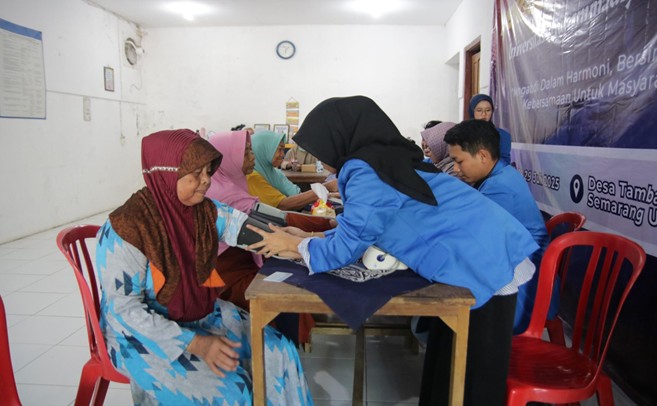
The Assisted Area program was implemented over two days. The first day began with an opening ceremony followed by training for integrated health post (Posyandu) cadres on anthropometric measurements and monitoring toddler growth and development. Afterward, FIKKES BEM students conducted a nutrition education simulation for cadres and parents of toddlers, followed by a hands-on practice of making innovative supplementary feeding (PMT) from mackerel. The second day, counseling on balanced nutrition and stunting prevention was carried out, as well as education on metabolic diseases including blood sugar, cholesterol, and uric acid. Afterward, free health checks were conducted for the community for early detection of metabolic diseases. It is hoped that these Assisted Area activities will realize Tanjung Mas Village as a sustainable Nutrition Aware Village

Latest activities and contributions towards