The development of an area is often marked by the increasing number of new families settling in the area. As population growth increases, demand for housing also increases, ultimately driving the emergence of new housing developments. These homes are an option for young families looking to start their lives in a more comfortable and strategic location. One area with the rapid development of new housing is Pandansari Hamlet, Tampingan Village, Boja Regency. Tampingan Village covers an area of 193.64 hectares with various land uses, including residential areas, agriculture, plantations, and other public facilities. This area consists of four hamlets, one of which is Pandansari Hamlet, which has one RW (neighborhood association) and 16 RT (neighborhood association).
Based on the 2014-2019 Village Profile, the population of Tampingan Village at the end of December 2019 was recorded at 4,569 people, consisting of 2,310 men and 2,259 women, with a total of 1,450 families. With the growing number of young families in Pandansari Hamlet, a need for childcare services has emerged. Many of these new families have young children, but both parents work full-time, entrusting their children to informal caregivers from the surrounding area. This presents an opportunity for the community to improve their economy through the development of childcare services. However, the existing childcare system still has several weaknesses, such as the lack of clear parenting standards and a lack of a robust management system for childcare services.
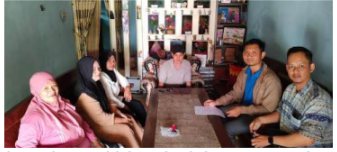
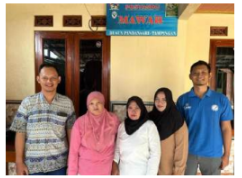
Based on discussions with residents and the Mawar Integrated Health Post (Posyandu Mawar), several key issues were identified that need to be addressed: The first issue is that many children are cared for by individuals in the community who lack scientifically based parenting practices. This has the potential to impact children’s growth and development, particularly during the golden age, a critical period for cognitive, social, and emotional development. The second issue is the lack of a clear management and monitoring system for childcare services in this area. This makes parents hesitant to entrust their children to the care of the community, as there is uncertainty about the quality and safety of the care provided.