SUSTAINABILITY AT UNIVERSITAS MUHAMMADIYAH SEMARANG

"Leading Sustainable Innovation for a Better Future"
Universitas Muhammadiyah Semarang integrates sustainability into education, research, and community engagement to create meaningful and lasting impact.

At Universitas Muhammadiyah Semarang, sustainability is more than a commitment—it is a guiding principle that shapes how we think, learn, and act. We believe that higher education plays a vital role in addressing today’s global challenges, and we continuously strive to embed sustainable values into every aspect of our institution.

Our approach begins with education. We integrate sustainability across disciplines, equipping students with the knowledge, critical thinking skills, and ethical awareness needed to respond to complex environmental and social issues. Learning extends beyond the classroom, as students, lecturers, and researchers actively engage with communities to create meaningful, real-world impact.

In research, we are dedicated to advancing innovative solutions that contribute to a more sustainable future. Our work focuses on key areas such as climate change, renewable energy, sustainable transportation, and social inclusion. Through interdisciplinary collaboration, Universitas Muhammadiyah Semarang continues to generate knowledge that supports both local development and global sustainability efforts.

Equally important, we ensure that our campus reflects the values we promote. Through sustainable operations—including energy efficiency, responsible waste management, and the development of green infrastructure—we are creating a campus environment that is resilient, environmentally conscious, and future-oriented. Together, we aim to become a model of sustainability in higher education, contributing to the achievement of the Sustainable Development Goals (SDGs) and fostering a more inclusive and sustainable world.

Certified UI Greenmetric Campus

Universitas Muhammadiyah Semarang achieved a prestigious 59th position nationally in the 2025 UI GreenMetric World University Rankings, marking a strong start in sustainability. UNIMUS also ranked 2nd among private universities (PTS) in Central Java and 6th among Muhammadiyah/'Aisyiyah universities (PTMA).

Renewable Energy Produced on Campus

Universitas Muhammadiyah Semarang has developed several renewable energy initiatives to enhance sustainability and energy independence within the campus area. The university utilizes three main renewable energy sources: biodiesel, solar power, and clean biomass (briquette stoves). These systems form part of UNIMUS’s long-term strategy to transition toward green energy and reduce greenhouse gas emissions.

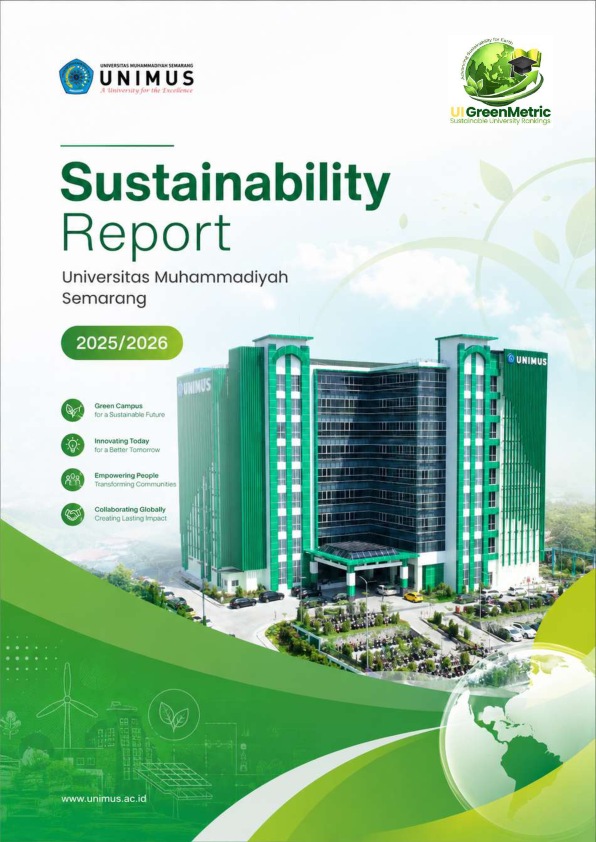
Universitas Muhammadiyah Semarang Sustainability Report 2025/2026 reflects the university’s continued commitment to transparency, accountability, and sustainable development by documenting the progress achieved throughout the 2025/2026 academic year. Building upon previous sustainability initiatives, this report demonstrates how sustainability principles have been further embedded across institutional governance, academic activities, research, community engagement, and campus operations.

This edition places greater emphasis on the development of an integrated and sustainable campus environment. It presents comprehensive information on the university’s compact campus planning, centralized facility management, and the strategic utilization of academic, research, healthcare, student support, and community service facilities. Through an integrated campus system, Universitas Muhammadiyah Semarang continues to improve operational efficiency, optimize land use, strengthen accessibility, and create a learning environment that supports environmental, social, and economic sustainability.

The report also highlights the university’s measurable contributions toward achieving the Sustainable Development Goals (SDGs), showcasing institutional policies, innovative programs, and evidence-based performance across multiple sustainability dimensions. By strengthening responsible governance and continuously improving campus infrastructure and services, Universitas Muhammadiyah Semarang reaffirms its role as a higher education institution committed to creating lasting value for its students, society, and future generations.
Universitas Muhammadiyah Semarang’s Sustainability Report 2024/2025 was developed as a reflection of our strong commitment to transparency, accountability, and sustainable development. The report is compiled as part of the university’s continuous effort to integrate sustainability into its academic, research, and operational frameworks.

This report presents a comprehensive overview of the university’s progress in aligning its activities with the Sustainable Development Goals (SDGs). It highlights key programs, institutional policies, and measurable achievements that demonstrate our dedication to creating positive environmental and social impact.

By documenting these initiatives, Universitas Muhammadiyah Semarang reaffirms its role as an active contributor to sustainability in higher education. The report also serves as a strategic communication tool, providing stakeholders with clear insights into our governance, priorities, and long-term vision toward a more sustainable and inclusive future.

Universitas Muhammadiyah Semarang is committed to transparency and accountability in its sustainability efforts. This Carbon Emission Report provides a comprehensive overview of greenhouse gas emissions, key sources, and mitigation initiatives. It reflects the university’s ongoing commitment to climate action and the transition toward a low-carbon campus. Please refer to the attached document for detailed information.

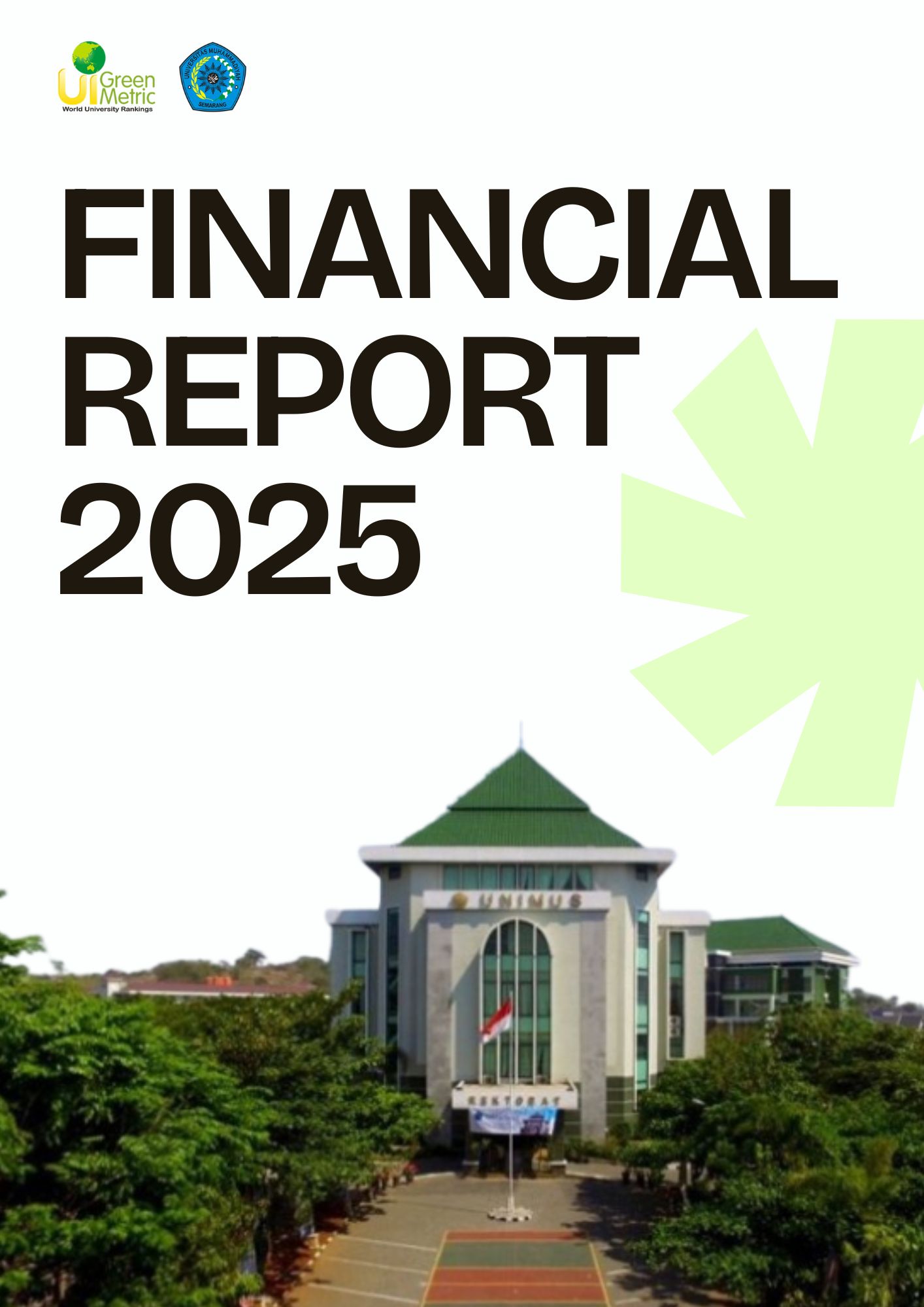
The financial management of Universitas Muhammadiyah Semarang (UNIMUS) for the 2025/2026 academic year continues to be guided by the principles of transparency, accountability, efficiency, and sustainability. Financial planning is strategically aligned with the university’s vision and institutional priorities through a participatory budgeting process that supports academic excellence, research, community engagement, digital transformation, and sustainable campus development.

To strengthen its financial resilience, UNIMUS maintains diversified sources of revenue, including tuition fees, research and innovation grants, collaborations with government and industry, as well as various institutional partnerships. Financial resources are allocated prudently to ensure effective budget utilization while supporting investments in educational quality, infrastructure development, information technology, environmental sustainability, and student services.

The university further reinforces good financial governance through regular internal audits, comprehensive financial reporting, and compliance with applicable laws and institutional regulations. By continuously enhancing financial management practices and promoting responsible resource allocation, UNIMUS demonstrates its commitment to institutional sustainability and the creation of long-term value for all stakeholders.

The financial management of Universitas Muhammadiyah Semarang (UNIMUS) is carried out in a transparent, accountable, and sustainable manner to support its strategic goals and long-term development. Financial planning is aligned with institutional priorities through a structured and participatory budgeting system involving key stakeholders.

The university maintains diversified revenue sources, including tuition fees, research grants, and partnerships, to ensure financial resilience and stability. Expenditures are carefully monitored to ensure efficiency and alignment with planned budgets, with investments focused on academic quality, research development, digital transformation, and sustainability initiatives.

To ensure accountability, UNIMUS conducts regular internal audits and prepares periodic financial reports in compliance with applicable regulations. This approach reflects the university’s commitment to responsible resource management and sustainable development.

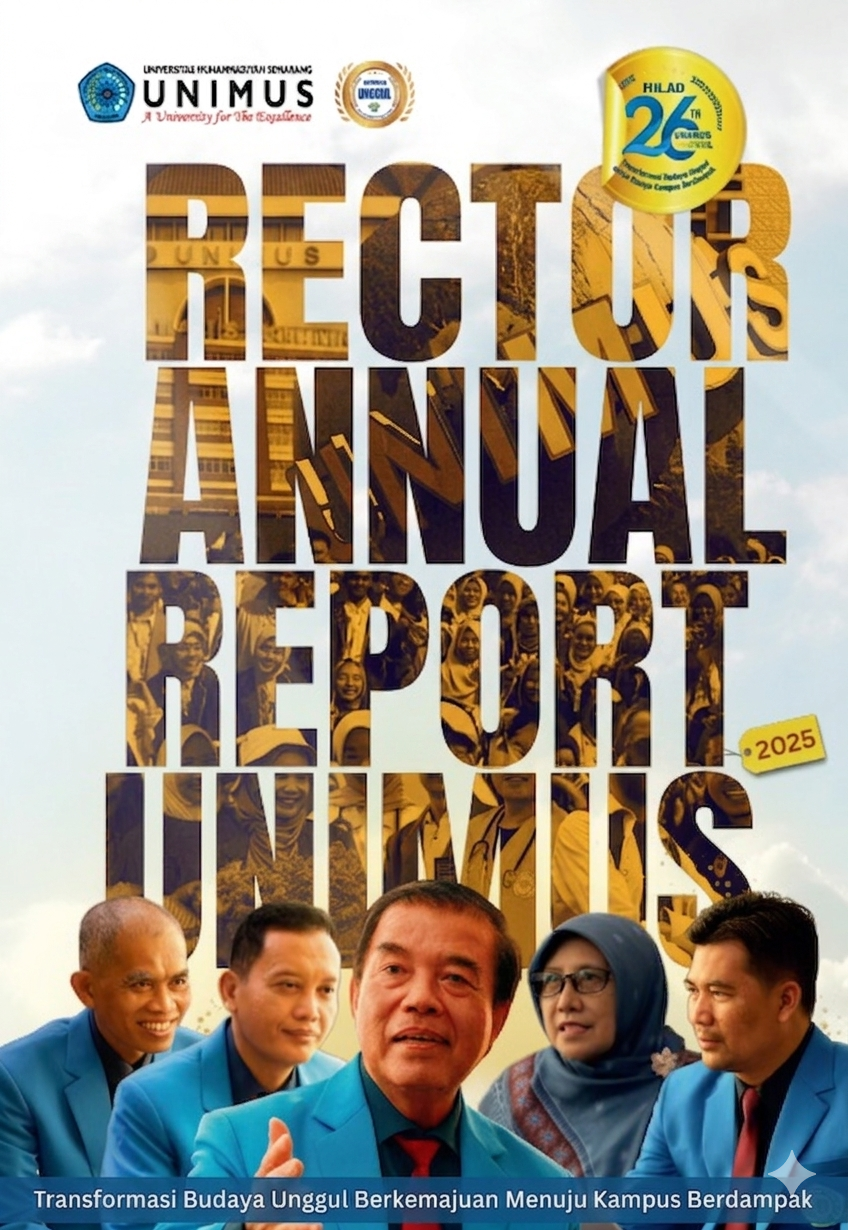
Universitas Muhammadiyah Semarang (UNIMUS) presents its Annual Report as a reflection of the institution’s performance, achievements, and continuous commitment to excellence in education, research, community engagement, and sustainability. Throughout the year, UNIMUS has demonstrated steady progress in strengthening academic quality, expanding research output, and enhancing its contribution to society through impactful community service programs.

This report outlines key developments across institutional governance, financial management, environmental sustainability, and social impact initiatives. It highlights the university’s efforts in fostering innovation, improving infrastructure, and integrating sustainable practices into campus operations and academic activities.

In line with its vision, UNIMUS maintains a strong commitment to transparency, accountability, and continuous improvement. The Annual Report serves not only as a documentation of accomplishments but also as a strategic tool to evaluate performance and guide future planning. Through this report, UNIMUS reaffirms its dedication to contributing to the Sustainable Development Goals (SDGs) and creating lasting value for stakeholders and society at large.

Follow Our Social Media

Contact Us

Jl. Kedungmundu Raya No. 18, Kec. Tembalang, Kota Semarang, Jawa Tengah.

(024) 76740296

Copyright 2025, UNIVERSITAS MUHAMMADIYAH SEMARANG. All Rights Reserved.